Table of Contents
ToggleA well-designed patio bar transforms a backyard from unused space into a destination for entertaining, relaxation, and year-round gatherings. Whether hosting a summer dinner party or enjoying a quiet afternoon, the right patio bar furniture sets the tone, and makes the difference between a setup that looks good and one that actually functions and lasts. Patio bar furniture has evolved significantly, with modern materials offering durability and style that rivals indoor furnishings while standing up to weather. This guide walks through selecting, sizing, and arranging the pieces that’ll make your outdoor bar the centerpiece of your home.
Key Takeaways
- Choose patio bar furniture materials based on your climate: aluminum for coastal areas, teak or cedar for natural appeal with maintenance commitment, and resin wicker for durability with minimal upkeep.
- A functional patio bar requires a 36-inch-high counter with 12–15 inches of overhang, appropriately sized bar stools, and nearby lounge seating positioned a few feet away to encourage mingling.
- Ensure proper spacing with 36 inches of clearance behind bar stools for movement and at least 3–4 feet distance from cooking areas to maintain safety and guest comfort.
- Invest in UV-resistant cushions, sealed finishes, and stainless steel hardware to maximize durability, and store cushioned pieces indoors during winter to extend furniture life dramatically.
- Cohesive patio bar design ties together through color and material continuity with your house and landscape, enhanced by strategic lighting, shade structures, and thoughtful flooring choices.
Understanding Patio Bar Furniture Styles and Materials
Patio bar furniture comes in distinct styles, modern, rustic, coastal, transitional, and traditional, each with a different aesthetic and material palette. Your choice should balance visual preference with the climate where you live and your tolerance for maintenance.
Popular Materials and Their Benefits
Aluminum frames are lightweight, corrosion-resistant, and require minimal upkeep. They won’t rot or rust and hold up to salt air, making them ideal for coastal or humid regions. Aluminum pairs well with weather-resistant cushions and tempered glass tops.
Teak and cedar are premium wood options prized for their natural oils, which resist decay and insects without chemical treatment. These woods age gracefully to a silvery patina but demand periodic oiling to maintain their original color. If left untreated, expect maintenance every 6–12 months. Budget accordingly: teak costs significantly more upfront.
Resin wicker (synthetic rattan) mimics the look of natural wicker but won’t fray, rot, or harbor mold. It’s durable, lightweight, and needs only occasional rinsing with a hose. Quality varies: higher-grade resin holds color better and resists UV fading longer than cheaper alternatives.
Steel and wrought iron offer classic elegance and durability but rust if the protective coating wears. Ensure pieces are powder-coated or hot-dip galvanized. Maintenance includes annual touch-ups to prevent rust spread.
Concrete and stone bar tops provide industrial style and withstand weather exceptionally well. They’re heavy (installation may require professional help), prone to staining, and need sealing every 1–2 years. They also conduct and retain heat, making them uncomfortable to lean against in full sun without protective padding.
Essential Patio Bar Furniture Pieces for Every Setup
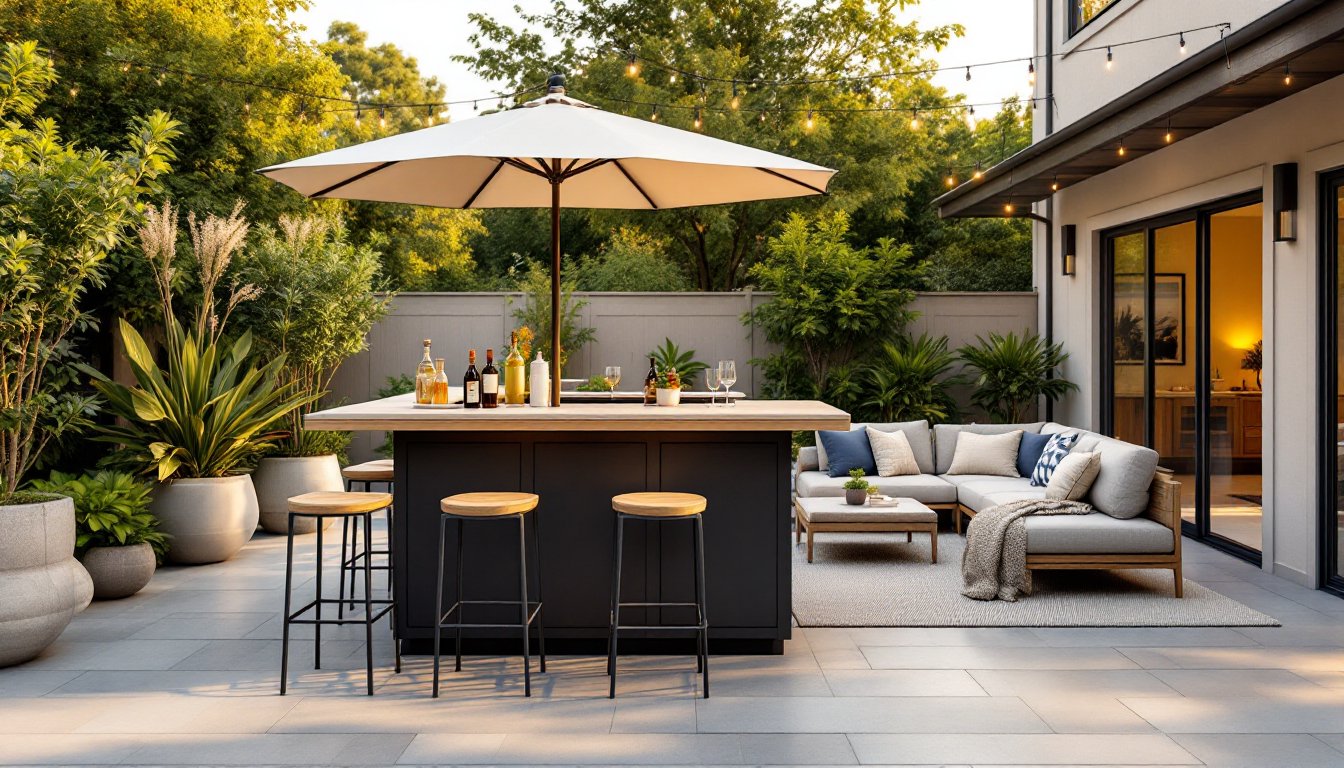
A functional patio bar starts with a counter or serving surface, bar stools, and appropriate seating nearby. Not every piece is mandatory, but each solves a specific purpose.
Bar counter or island is the anchor. Standard bar height is 36 inches (the same as indoor kitchen islands). Overhang at least 12–15 inches on the seating side so bar stools fit comfortably without guests’ knees hitting the base. Countertop depth should be at least 18–24 inches for beverages, glassware, and prep space.
Bar stools come in fixed-height (typically 24–26 inches for standard bar height) or adjustable models. Backless stools save space in tight areas: those with backs and footrests offer comfort for lingering conversations. Expect people to sit for extended periods, so padding and armrest support matter. Look for swivel bases if you want flexibility.
Lounge seating (sectionals, chairs, or benches) positioned a few feet from the bar encourages mingling without crowding the counter. A small side table holds drinks and snacks.
Shade structure (umbrella, pergola, or retractable awning) extends usability into peak sun hours and protects furniture from premature fading and UV damage. A 9–11 foot umbrella requires a 50+ lb base (weighted or in-ground) to prevent tipping in wind.
Bar-specific accessories like bottle racks, wine coolers, and compact fridges add functionality without dominating space. If you plan to serve regularly, a mini fridge rated for outdoor use (with sealed electronics) pays dividends.
Sizing and Layout Considerations for Your Space
Before ordering, measure your patio length and width, then account for foot traffic, sight lines, and adjacent structures. A cramped bar feels awkward: too much empty space wastes the potential.
Minimum clearance behind bar stools should be 36 inches: this lets someone stand and move without bumping the stool. If you plan a prep/service area behind the counter, allow 48 inches minimum.
Patio dimensions affect layout. A 12×16 foot patio comfortably fits a compact 4–6 foot bar with seating for 4–5 people plus lounge chairs. Smaller patios (8×10 feet) work with a narrow 3-foot bar and 2–3 stools. Oversized patios (20×20 feet) can accommodate a sprawling L-shaped bar with multiple zones.
Sight and traffic flow matter in a social setting. Position the bar so the person tending it faces gathering areas, not a fence. Leave pathways from the house and between seating zones: nothing kills a gathering like tripping guests. Keep the bar at least 3–4 feet from the patio edge if grilling or cooking is nearby (smoke and splatter travel).
Furniture footprints vary widely. Measure the base dimensions, not just the top surface. Some bar stools have X-frame bases that jut outward: others are compact. Similarly, lounge chairs recline differently, some require 6 feet of space: others take 4 feet. Sketch a top-down layout before purchasing to avoid buyer’s remorse.
Durability and Weather Resistance: What to Look For
Outdoor furniture faces UV exposure, moisture, temperature swings, and seasonal weather. Durability isn’t just about materials, it’s about finishes, joinery, and design details.
UV-resistant cushions (look for Sunbrella or equivalent outdoor-grade fabric) resist fading far better than standard indoor fabrics, which bleach and degrade within a season. Cushions should be removable and stored during off-season or heavy rain.
Sealed wood resists moisture infiltration and rot. Check whether finishes are marine-grade: outdoor paint and stain aren’t equal. A piece labeled “exterior” still needs touch-ups: “marine” implies heightened durability. Cedar and teak are naturally rot-resistant: pine requires aggressive sealing to survive outdoors.
Welds and fasteners are critical. Bolted joints are easier to repair: welded frames are stronger but harder to fix. Stainless steel hardware won’t rust: galvanized is acceptable. Avoid plain steel bolts outdoors, they’ll seize and corrode.
Drainage in cushions and fabrics prevents mold and mildew. Look for quick-dry foam and textiles with drainage holes or ventilation channels.
Winter storage extends furniture life dramatically. If your climate dips below 32°F or receives heavy snow, bring cushions and cushioned pieces indoors. A protective cover is cheaper insurance than replacing a frost-cracked concrete counter or moisture-damaged teak frame.
Warranty coverage varies from 1 to 10 years. Premium outdoor furniture often includes a 5-year structural warranty. Read the fine print: some warranties exclude UV fading, which is common.
Creating a Cohesive Design and Comfort Zone
A patio bar doesn’t exist in isolation, it’s part of your home’s aesthetic. Harmony between the bar style and your house, landscaping, and existing outdoor decor elevates the whole space.
Color and material continuity tie elements together. If your house features stone siding, echo that in the bar counter material or facing. If your landscape is tropical, wicker and teak complement that palette naturally. Mixing metals (aluminum, steel, teak accents) works: random clashing styles doesn’t.
Lighting transforms evening utility into atmosphere. String lights (warm color temperature around 2700K) feel welcoming: spotlights on the bar work well functionally. Install GFCI-protected outlets rated for outdoor use, or rely on battery-powered LED options if running hardwired power isn’t feasible.
Shade and sun affect comfort and material longevity. A pergola provides dappled shade and structure: a market umbrella is portable. In very hot climates, thoughtful positioning relative to afternoon sun prevents the bar from becoming an oven.
Flooring surface impacts the overall feel. Pavers, stamped concrete, or composite deck boards pair well with bar furniture. A clean, level surface prevents wobbling stools and looks intentional.
Plantings and privacy soften hardscape. Low hedges or planters along patio edges define the space and buffer wind. Tall bamboo or lattice screens shield views and reduce noise.
Access and plumbing for a serious bar setup, especially one with a sink or cooler, require upfront planning. Running water and drain lines to a patio isn’t trivial: budget for professional installation and check local codes. A standalone cooler or beverage station is simpler to set up and relocate if needed.
Conclusion
Building a patio bar furniture setup that lasts, looks great, and functions well hinges on choosing durable materials suited to your climate, sizing pieces to your space, and maintaining them seasonally. Start with a quality bar counter and stools, add comfortable seating nearby, and layer in shade and lighting as budget allows. Small details, cushion care, finish touch-ups, winter storage, compound into years of reliable service. With intentional planning and honest assessment of maintenance tolerance, your outdoor bar becomes a cherished gathering place, not a faded afterthought.