Table of Contents
ToggleBalcony? Postage-stamp courtyard? Narrow side yard? Small spaces don’t mean sacrificing outdoor living, they just mean thinking smarter about what goes into them. The right small space patio furniture transforms a cramped corner into a genuinely usable retreat without crowding the area or creating an obstacle course every time someone steps outside. In 2026, the furniture market is packed with designs that prioritize compactness and multiple functions, letting homeowners squeeze genuine comfort and style into tight quarters. This guide walks through what actually works: multi-functional pieces, materials that don’t ask for constant maintenance, and layout strategies that maximize comfort without the clutter.
Key Takeaways
- Small space patio furniture prioritizes proportion and flexibility, transforming cramped outdoor areas into functional retreats without overwhelming the limited square footage.
- Multi-functional pieces like storage benches, nesting chairs, and expandable tables maximize usability while minimizing clutter in compact patios.
- Folding and collapsible furniture with reinforced hinges and solid cross-bracing are ideal for tight spaces, offering practical storage solutions without sacrificing dining or workspace options.
- Durable materials such as aluminum, teak, and quality resin wicker withstand weather and frequent use far better than cheap plastic or painted wood, delivering long-term value in small spaces.
- Strategic layout planning—measuring obstacles, choosing one primary function, and using vertical space—ensures small patios feel inviting and navigable rather than cramped.
- Quality small space patio furniture pieces that serve multiple purposes and fit the area’s scale create an extension of your home where every item earns its place.
Why Small Space Patio Furniture Matters
Cramped outdoor space often gets treated as an afterthought, but it shouldn’t. A well-furnished small patio becomes an extension of the home, a place to have morning coffee, entertain one guest comfortably, or simply breathe fresh air without feeling squeezed. Poor furniture choices (oversized lounge sets, rigid pieces, nothing that adapts) waste precious square footage and make the space feel smaller than it is.
Small space patio furniture solves this by prioritizing proportion and flexibility. Pieces are engineered to occupy less footprint while delivering real functionality: a bench that tucks under a table, a chair that nests with others, or a coffee table with built-in storage. The goal isn’t minimalism for its own sake, it’s choosing furniture that earns its place. When every piece serves a purpose and fits the scale of the area, the patio becomes inviting instead of cramped, and you actually use it.
Multi-Functional Pieces That Transform Compact Patios
Multi-functional furniture is the backbone of small space patio design. Storage benches double as seating and place to stash cushions or garden tools. Console tables expand to dining height, then collapse back to narrow side tables. Ottomans with trays function as footrests, side tables, or extra seating depending on the moment.
Look for pieces with hidden compartments: a side table with a lower shelf for planters, a bench with interior storage that opens from the top, or a coffee table with a removable tray for serving. These aren’t gimmicks, they’re practical solutions that address the dual demand of small spaces: you need functional furniture but not a warehouse of it.
Stack-able or nest-able chairs (think café-style metal frames or lightweight polypropylene) let you pull out four seats when guests arrive, then tuck three away when it’s just a couple enjoying the space. High-back chairs save floor space compared to loungers, and a corner banquette with storage underneath handles eating and socializing in one compact footprint. The best multi-functional pieces don’t advertise their flexibility, they just quietly solve the puzzle.
Space-Saving Styles to Consider
Choose one style direction and stick with it to avoid visual clutter. Contemporary minimalist (clean lines, metal frames, neutral cushions) makes small spaces feel intentional rather than overstuffed. Farmhouse cottage (painted wood, woven accents, soft colors) warms up tight areas and pairs well with potted plants. Scandinavian-inspired designs emphasize light woods, simple forms, and functionality, perfect for Nordic and temperate climates where the patio gets real use. Mediterranean or coastal styling (wicker, terracotta tones, natural textures) works in warmer zones and visually opens up spaces with earthy palettes.
Folding and Collapsible Options
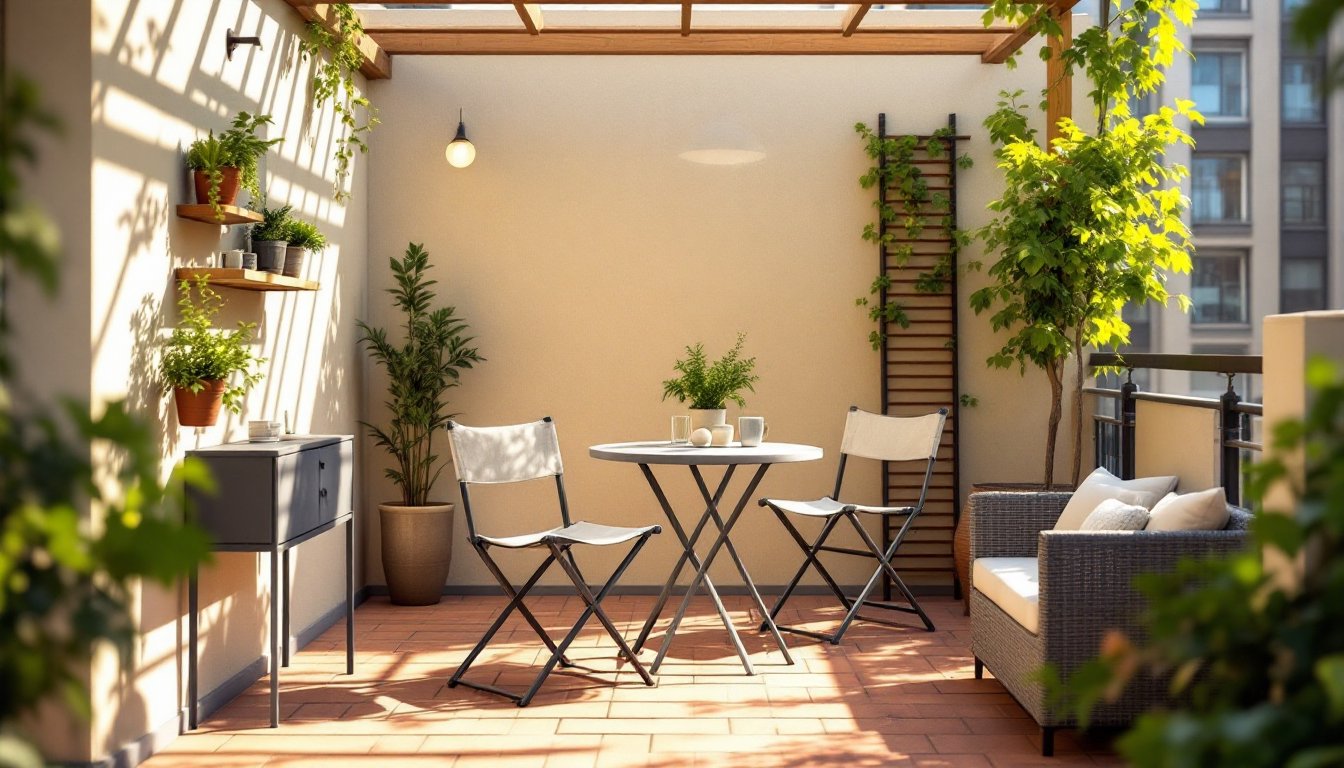
Folding and collapsible furniture is the secret weapon for truly tight spaces. A folding bistro table (18–24 inches deep, typically 24–30 inches wide) fits against a wall or in a corner when not in use, then unfolds for actual dining or workspace. Folding director’s chairs, wooden slatted designs, and canvas-seat models weigh 5–8 pounds each, so storing a pair in a closet or leaning against the house is realistic.
Wall-mounted folding tables (dropping down from brackets attached to the exterior wall or railing) are game-changers for balconies and micro-patios. When down, they’re a full 20–24 inches deep and accommodate a small dinner or drinks: when up, the footprint is zero. Similarly, over-the-railing clamp tables grab onto deck or patio railings without bolting anything permanent.
Before buying collapsible pieces, verify the hinge mechanism. Stainless steel or powder-coated steel hinges hold up to weather and frequent use. Plastic hinges crack in cold snaps, and uncoated metal rusts quickly near salt water or in high-humidity climates. Check load ratings too, many lightweight folding tables max out at 50–75 pounds, which is fine for drinks and a plate or two but not a full holiday spread. Cheap models wobble: invest in pieces with reinforced corners and cross-bracing.
Choosing the Right Materials for Durability
Material choice makes or breaks small space patio furniture. In tight quarters, every piece shows wear, so durability isn’t optional.
Teak and other hardwoods are premium but long-lasting. Real solid teak resists rot, insects, and weather for 15+ years with minimal maintenance (occasional sealing helps). Cost runs $400–$800+ per seat. Alternatives like cumaru and ipe offer similar durability at slightly lower prices but require more finishing work.
Aluminum frames (not hollow, check the wall thickness) are lightweight, rust-proof, and pair well with weather-resistant slings or cushions. Look for powder-coated finishes (typically 2–3 mils thick) to resist oxidation. Aluminum doesn’t rot and requires only occasional wash-downs. Expect $150–$400 per piece.
Resin wicker (synthetic, not natural rattan) resists UV fading and moisture better than genuine wicker. Inspect stitching, quality pieces use reinforced thread, not flimsy synthetics that unravel. Pair resin frames with Sunbrella or equivalent solution-dyed acrylic cushion fabric, which doesn’t mildew and resists salt spray if you’re coastal. Budget $200–$500 per chair with cushions.
Avoid painted wood in wet climates without annual touch-ups. Cheap plastic rarely holds up past one season. Cushion covers should be removable and machine-washable or hose-down-friendly. Never skip material research, a $300 piece that lasts five years beats a $100 piece that warps in two.
Layout Strategies for Maximum Comfort
Layout matters more in small spaces than in sprawling yards. Start by measuring the patio’s length, width, and any permanent obstacles (doors, stairs, outlets, plants). In a 6-foot-by-8-foot space, forcing a dining table, lounge chair, and planter creates chaos. Instead, pick one primary function: eating, lounging, or entertaining.
For eating-focused patios, a 24–30-inch-diameter round table or a 36-inch-by-48-inch rectangular table (small bistro or cafe size) with two folding chairs works. Leave 18–24 inches of clear walking space around it to avoid shin-bruising. Consider a narrow console table against the wall that doubles as a cocktail or planting surface, then unfolds wider for actual dining.
For lounge-focused spaces, two chairs and a small side table (15–18 inches square) create a conversation nook without overwhelming the area. Add a footstool that tucks underneath when not in use. A potted plant in one corner and perhaps a tall planter along the railing softens hard edges without eating floor space.
Use vertical space aggressively: wall-mounted shelving, trellises with climbing vines, overhead shade cloth (a pergola or shade sail anchored to the wall and railing). This draws the eye upward and makes the area feel open. Anchor furniture to prevent tipping if the patio is exposed to wind. Deck screws or masonry anchors secure chairs or benches to composite decking or concrete, a simple precaution that matters on balconies or windy exposures. Keep clear sight lines through the space. Arrange furniture to create zones, not barriers. If guests can’t move from door to railing without turning sideways, furniture is too bulky or poorly positioned.
Conclusion
Small space patio furniture isn’t a compromise, it’s an intentional choice. The right pieces, sized and styled for the actual area, turn a neglected corner into a genuine outdoor room. Prioritize multi-function, choose durable materials suited to your climate, and think carefully about layout before buying. Start with one piece, a folding table or a quality chair, and build from there. Every addition should earn its place.