
Table of Contents
ToggleLeather furniture has held its place in American living rooms for decades, and for good reason. It’s durable, timeless, and adds an undeniable touch of sophistication to any space. Unlike fabric upholstery that shows wear and stains easily, leather ages with character and withstands daily use when properly maintained. Whether someone is furnishing a living room from scratch or upgrading an existing space, understanding leather quality, selecting the right pieces, and knowing how to care for them can mean the difference between a purchase that lasts 5 years and one that lasts 25. This guide walks through what makes leather the practical choice for living room furniture, how to evaluate leather types, which pieces define a cohesive layout, and the straightforward maintenance routine that keeps leather looking sharp.
Key Takeaways
- Quality living room leather furniture withstands 10,000+ hours of use—roughly 5–10 years of normal activity—making it more durable than fabric alternatives that fail at 3,000–5,000 hours.
- Full-grain leather offers maximum durability and character but costs 40–60% more, while top-grain leather furniture provides the best balance of quality, stain resistance, and affordability for most homeowners.
- Proper leather furniture maintenance requires only monthly dusting, immediate spill blotting with pH-neutral cleaner, and conditioning every 6–12 months to prevent cracking and maintain its appearance.
- A well-designed living room layout anchors on a leather sofa (84–96 inches wide), then adds complementary accent chairs and ottomans to create function and visual interest without overwhelming the space.
- Leather’s timeless design works equally well in casual and formal settings, develops an attractive natural patina over time, and resists odor and dust better than fabric, making it ideal for households with allergies or pets.
- Positioning living room leather furniture away from direct sunlight, heat sources, and radiators preserves color and prevents excessive drying that can lead to cracking.
Why Leather Remains the Gold Standard for Living Room Furniture
Leather furniture has earned its reputation for a reason. It handles spills better than most fabrics, a quick wipe with a slightly damp cloth and leather bounces back. Pet claws and everyday wear leave marks, yes, but leather develops a natural patina over time that many homeowners find attractive rather than detrimental. Unlike microfiber or linen, leather doesn’t trap dust, pet hair, or odors as easily, making it a smarter choice for households with allergies.
From a durability standpoint, quality leather withstands 10,000+ hours of use before showing visible wear, roughly the equivalent of 5–10 years of normal living-room activity. Fabric furniture typically fails at 3,000–5,000 hours. That longevity justifies the higher upfront cost. Leather also resists color fading from sunlight better than many natural fibers, so a leather sectional near a south-facing window won’t look bleached after two years.
On the design side, leather reads as both casual and formal. A cognac-brown leather sofa works equally well in a minimalist loft or a traditional den. The material doesn’t scream trend, it whispers timelessness. When properly maintained, leather pieces become heirloom-quality investments rather than disposable furnishings.
Choosing the Right Leather Type for Your Space
Not all leather is created equal. Understanding the three main grades helps someone make an well-informed choice aligned with their budget and lifestyle.
Full-Grain vs. Top-Grain vs. Bonded Leather
Full-grain leather is the top tier. It’s the entire thickness of the hide with no layers removed, meaning every scar, mark, and texture variation from the animal remains visible. This authenticity is part of its charm, and its durability. Full-grain leather develops a rich, deeper patina over time and resists cracking far better than processed alternatives. The tradeoff: it’s the most expensive option, typically costing 40–60% more than top-grain.
Top-grain leather is sanded or buffed to remove surface imperfections, then finished with a protective coating. It’s still genuine leather (unlike bonded), but the surface is artificially uniform. Top-grain ages more predictably and resists staining better than full-grain due to its sealed finish. For most homeowners balancing quality and budget, top-grain leather furniture hits the sweet spot, it’s durable, easier to clean, and costs 30–40% less than full-grain.
Bonded leather is a byproduct: leather scraps glued to a polyurethane backing. It looks like real leather initially but deteriorates faster, peeling or cracking within 3–5 years. Avoid it unless furniture cost is the absolute priority and replacement is expected.
Consider lifestyle when choosing. A household with young kids or pets benefits from top-grain’s stain resistance. A design-focused buyer who appreciates natural variation and plans to keep pieces 15+ years should invest in full-grain. Budget constraints point toward quality top-grain as the practical middle ground.
Key Furniture Pieces to Define Your Living Room
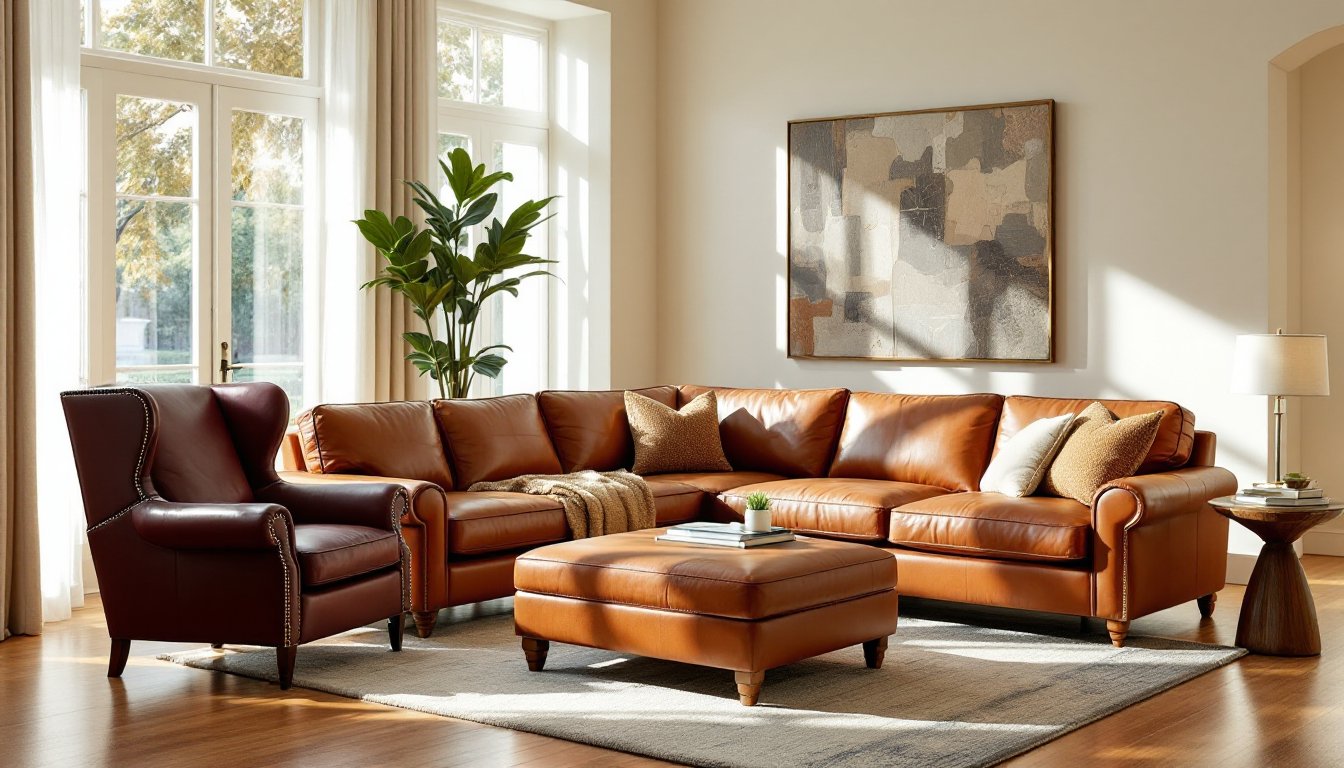
A well-planned living room leather arrangement starts with anchor pieces and builds outward. Most layouts center on a sofa, add accent seating, and tie in functional pieces.
Leather Sofas and Sectionals
A leather sofa is the living room’s workhorse. Standard dimensions run 84–96 inches wide, 38–40 inches deep, and 30–36 inches tall (arm to arm). Measure the room’s entry points, doorways, hallways, stairs, before ordering, because a beautiful 96-inch sectional is useless if it can’t be delivered. Sectional sofas (typically 2–3 pieces forming an L or U shape) work well in open-plan spaces or larger rooms: they provide more seating but demand 180+ square feet to avoid looking cramped.
Leather sofas come in different fill materials: down (plush, requires regular fluffing), down-blend (balanced comfort and structure), or high-density foam (firmer support, longer-lasting). Down-blend offers the best combination for most households. When shopping, test the seat depth and firmness in person if possible, leather sofas firm up slightly over the first 2–3 months as the material settles.
Accent Chairs and Ottomans
Accent chairs add flexibility and personality. A single leather wingback or club chair near a window creates a reading nook: paired chairs flanking the sofa encourage conversation. Accent chairs typically measure 30–36 inches wide and work well in rooms where a second sofa would overwhelm the layout.
Leather ottomans serve double duty, footrest and extra seating, or even a low coffee table alternative. They’re available in standard 24×24-inch cube shapes (fitting under most side tables) up to larger 48-inch rectangular versions. A leather ottoman in a complementary color (like a cognac ottoman paired with a caramel sofa) adds visual interest without clashing. Ensure ottomans have a sturdy hardwood or plywood frame, cheap particle-board cores collapse after a couple of years of foot traffic.
Maintaining and Cleaning Your Leather Furniture
The best leather furniture investment fails without basic maintenance. Fortunately, leather upkeep is simpler than most people expect and requires no specialized tools.
Monthly light cleaning: Dust with a soft, lint-free cloth weekly. For spills, blot immediately with a damp cloth, don’t rub, which pushes liquid deeper into the grain. Use pH-neutral leather cleaner (most major furniture stores stock these under $15–$30 per bottle) applied to a cloth, not sprayed directly on leather. Wipe clean with a second damp cloth and let air dry. Avoid silicone-based sprays: they attract dust over time.
Conditioning: Leather is skin and benefits from conditioning every 6–12 months, depending on humidity. Dry climates (below 40% humidity) demand more frequent conditioning: humid regions need it less often. A quality leather conditioner (thin, oil-based formula) restores suppleness and prevents cracking. Apply with a soft cloth using circular motions, let it sit for 10–15 minutes, then buff away excess with a clean cloth.
Stain treatment: Ink, grease, and wine require quick action. Blot immediately and apply a specialized leather stain remover per product instructions, most work within minutes. For set-in stains, a professional leather cleaner ($150–$300 per sofa) can often restore the piece. This is worth the cost for high-value furniture.
Sunlight and heat: Position furniture away from direct sunlight and heat sources (fireplaces, vents). UV exposure fades leather unevenly: consistent indirect light preserves color. Avoid placing leather pieces against radiators or in front of forced-air vents, which dry the material excessively.
Pets: A leather protectant spray (applied annually) adds a sacrificial layer against claws and spills without altering leather’s feel. It’s not a cure-all, but it buys time and reduces staining risk. Keep nail clippers handy, trimmed claws cause significantly less damage than untended ones. For pet hair, a rubber broom or lint roller works better than a vacuum, which can damage leather with its beater bar.