Table of Contents
ToggleInvesting in high-end living room furniture isn’t just about aesthetics, it’s about selecting pieces that’ll anchor a space for decades. Whether someone is refreshing their entire living room or curating key statement pieces, understanding the difference between quality construction and trendy shortcuts makes all the difference. High-end furniture combines superior materials, expert craftsmanship, and timeless design to create a room that feels both inviting and intentional. This guide walks through the essentials of choosing premium living room pieces that deliver lasting value, aesthetic appeal, and genuine comfort.
Key Takeaways
- High-end living room furniture combines superior materials, expert craftsmanship, and timeless design to create pieces that anchor a space for decades rather than trending toward disposal.
- Quality construction details—such as kiln-dried hardwood frames, eight-way hand-tied springs, and mortise-and-tenon joinery—determine whether furniture maintains its shape and comfort for 10+ years.
- Premium materials like full-grain leather, natural fiber blends with high Martindale counts (above 15,000), and hardwoods such as walnut and oak develop character and withstand daily use far better than budget alternatives.
- A cohesive high-end living room typically starts with four foundational pieces: a statement sofa, accent chairs, a media console, and a substantial coffee table, arranged to emphasize a focal point and maintain conversation-friendly distances.
- Design longevity and timeless aesthetics (mid-century modern, transitional, or contemporary) matter more than trendy styles; a $4,000 sofa lasting 15 years is often more cost-effective than cheaper alternatives requiring frequent replacement.
- Reupholstering services and manufacturer warranties (typically 10 years for frames, 5 years for cushions) extend the lifespan of high-end furniture indefinitely, making premium pieces a true long-term investment.
Understanding High-End Living Room Furniture Quality and Craftsmanship
Premium living room furniture speaks through details that most buyers never see. The frame construction, joinery method, and fill materials define whether a sofa will hold its shape after five years or sag within two. High-end manufacturers invest in eight-way hand-tied springs, kiln-dried hardwood frames, and sustainably sourced cushion cores rather than cheaper foam that breaks down rapidly.
Craftsmanship also extends to finishes. A quality wooden furniture piece should feature mortise-and-tenon joinery, where wood pieces lock together at precise angles, rather than relying on staples or particle board. For upholstered items, genuine leather hides natural grain variation and develops a patina over time, while lower-grade vinyl peels and cracks.
When shopping, ask manufacturers or retailers specific questions: What wood is the frame? (Kiln-dried hardwood like oak or beech is superior to pine or plywood.) How are cushions filled? (High-resilience foam, down blend, or latex blend is preferable to standard polyurethane.) Are springs hand-tied? Hand-tied construction takes longer but ensures each spring moves independently, preventing the “sagging middle” common in budget furniture.
Materials That Define Luxury Furniture
Luxury furniture relies on materials that age beautifully and withstand daily use. Full-grain leather is the gold standard, it’s durable, repairable, and develops character. Top-grain leather is slightly lower grade but still robust: anything labeled “bonded leather” is essentially plastic over paper and won’t last.
For fabric upholstery, natural fibers like linen, wool, and cotton offer breathability and elegance, though they’re less stain-resistant than synthetics. High-end manufacturers often blend natural fibers with durability-boosting synthetics. Look for a Martindale count above 15,000, this measures fabric durability under friction. Anything below 10,000 will show wear in high-traffic living rooms.
Wood selections matter equally. Walnut, cherry, and oak are premium hardwoods with tight grain structure: they resist warping and accept stain beautifully. Veneered pieces (thin quality wood glued over plywood) are acceptable in high-end furniture if the veneer is thick and the base is solid plywood, not particle board.
Filler materials also define longevity. Eight-way hand-tied springs provide the most responsive, long-lasting support. High-resilience foam (HR foam) resists compression better than standard polyurethane. Down-blend cushion fills combine natural down with synthetic fibers for a plush feel that maintains structure longer than pure down.
Key Furniture Pieces Every Sophisticated Living Room Needs
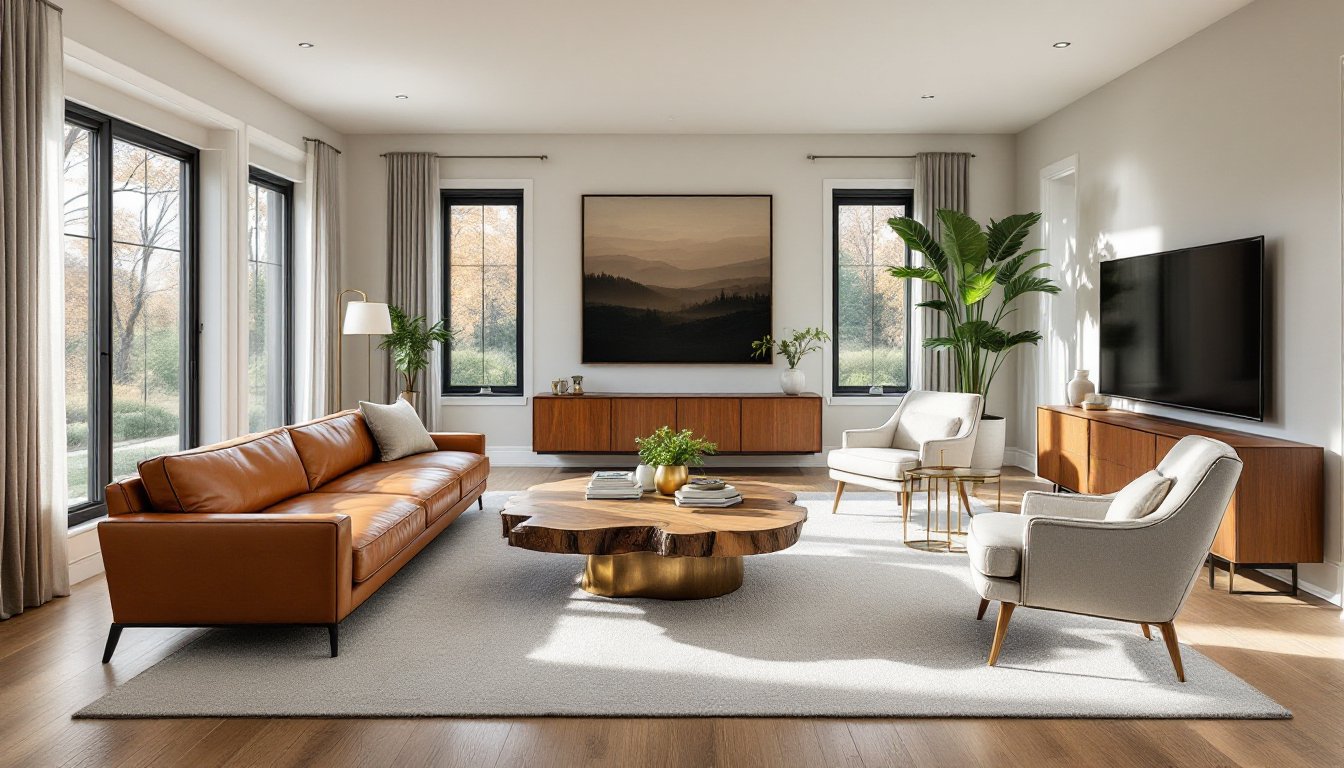
A cohesive high-end living room typically starts with four foundational pieces: a statement sofa, accent chairs, a media console, and a coffee table.
The sofa is the room’s anchor. In luxury spaces, sizing matters, a 90-inch sofa creates better proportion than a 72-inch piece in a spacious room. Consider modular or sectional designs that suit the layout without overwhelming the space. Look for rolled arms, nailhead trim, or tufting as design details that signal quality. Avoid overstuffed silhouettes unless that’s the explicit aesthetic.
Accent chairs add functionality and visual interest. A pair of wingback chairs, club chairs, or modern lounge chairs flanking a side table creates balance. These pieces should coordinate with the sofa’s aesthetic, matching fabric, complementary wood tones, or intentional contrast.
A media console or entertainment center serves both form and function. High-end versions feature solid wood construction, cable management built into the back, and proportions that don’t scream “TV stand.” Floating designs or credenza-style pieces feel more architectural than traditional TV stands.
The coffee table should be substantial. Thin, delicate tables look cheap even if they’re expensive. A solid wood table with tapered legs, marble top with wood base, or live-edge slab conveys thoughtfulness. Size it so there’s 18 inches between the table and sofa for comfortable legroom.
Secondary pieces like side tables, ottomans, and shelving complete the layer. Nesting tables, console tables behind a sofa, or a statement bookcase add depth without clutter.
Design Styles That Work Best for Premium Spaces
High-end furniture thrives in specific design languages that prioritize timelessness over trend. Mid-century modern remains the most durable aesthetic, clean lines, tapered legs, and functional design age beautifully. A low-profile sectional with wood arms, paired with accent chairs from the era, creates sophisticated restraint.
Transitional design blends traditional craftsmanship with contemporary silhouettes. Think upholstered sofas with rolled arms paired with sleek glass tables or linear light fixtures. This style accommodates both classic and modern accents without feeling disjointed.
Contemporary spaces work best with premium high-end pieces because quality materials compensate for minimal ornamentation. A sculptural sofa in stunning leather, paired with metal and wood accent tables, relies on craftsmanship and form to shine.
Traditional high-end pieces, tufted sofas, wingback chairs, ornate wood tables, require genuine quality to avoid looking overwrought. Authentic wood detailing, genuine leather, and proper proportions make the difference between elegant and overdone.
The key is selecting a cohesive aesthetic and letting that guide every purchase. Mixing too many styles dilutes the impact, even with luxury pieces. A well-curated living room of eight high-quality items in one design language outperforms a cluttered space with twenty mixed pieces.
Investment Value and Long-Term Durability
Premium furniture is an investment that should hold appeal and functionality for 10+ years. Unlike fast furniture that trends toward disposal, high-end pieces retain value through timeless design and repairability.
Durability directly impacts true cost. A $4,000 sofa lasting 15 years costs roughly $267 annually: a $1,200 sofa needing replacement every five years costs $240 annually before accounting for disposal and the hassle of redecorating.
Reputable manufacturers stand behind their work. Most premium furniture comes with warranties covering frame defects (often 10 years) and cushion degradation (5 years). Reupholstering services, available for almost any quality piece, extend lifespan indefinitely. Replacing cushion fills, fixing wood legs, or adding new fabric is practical long-term maintenance, not disposal.
Design longevity matters more than durability specs. A sofa in a passing trend may fail structurally at year seven, but even if it survives, it’ll feel dated. High-end pieces in timeless silhouettes (rolled arms, neutral palettes, clean-line frames) remain visually relevant even as decor accents refresh around them.
Authenticity adds value. Custom pieces made-to-order with specific dimensions, fabric selections, and finishes become harder to replace than standard options. Limited-production designs from respected manufacturers (especially vintage or collectible high-end pieces) sometimes appreciate in value. Storage and care, avoiding direct sunlight, using furniture covers, professional cleaning, protects the investment.
Creating a Cohesive High-End Living Room Layout
Layout transforms individual premium pieces into a unified space. Start by identifying the room’s focal point, the fireplace, large window, or where the TV will live. Arrange seating to face this focal point, maintaining conversation-friendly distances.
Proportions matter. A 90-inch sofa in a 12-by-14-foot room feels right: the same sofa in a 10-by-12-foot space dominates awkwardly. Account for traffic patterns, ensure there’s at least 18 inches between furniture groupings for natural movement.
Layering creates sophistication. Start with the large pieces (sofa, sectional), anchor with a quality area rug sized to ground the seating area, then layer in side tables, accent chairs, and console tables. Avoid leaving large blank walls: a credenza, console table, or floating shelves add functionality and visual balance.
Scaling accent pieces is crucial. If the sofa is low and linear, pair it with taller wingback chairs for contrast. If the sofa is high-backed and upholstered, ground it with a substantial wood coffee table and sleek metal side tables for balance.
Lighting ties it together. Floor lamps flanking a sofa, a statement table lamp on a console, and overhead fixtures create layered illumination that enhances the room’s premium feel. Dimmable fixtures allow mood adjustment without compromising the aesthetic.
Final touches, throw pillows, a quality area rug, wall art, and tasteful accessories, should echo the furniture’s materials and style. Restraint prevents the room from feeling cluttered: better to have fewer, better-chosen accents than a crowded space.
Conclusion
Choosing high-end living room furniture means prioritizing quality construction, durable materials, and timeless design over trends. By understanding craftsmanship details, selecting foundational pieces thoughtfully, and arranging them cohesively, anyone can create a sophisticated space that feels intentional and lasts. Premium furniture rewards patience and discernment, take time to evaluate frames, springs, and finishes, and the result is a living room that elevates daily life for years to come.