Table of Contents
ToggleWrought iron patio furniture carries timeless appeal, it’s durable, elegant, and built to last decades when properly maintained. But new pieces from quality manufacturers can cost hundreds or thousands of dollars per item. Buying used wrought iron patio furniture opens the door to premium craftsmanship at a fraction of retail prices. Whether shopping estate sales, online marketplaces, or local antique dealers, savvy buyers can score stunning conversation sets, dining tables, and lounge chairs without very costly. This guide walks through what to look for, where to hunt, and how to negotiate deals on quality used pieces that’ll anchor a backyard for years to come.
Key Takeaways
- Used wrought iron patio furniture offers 50–70% savings compared to new pieces while maintaining the durability and elegance that make wrought iron a premium outdoor choice.
- Always inspect used pieces in person for structural rust at joints and welds, as repair costs can reach $100–$300+ per joint and quickly eliminate savings.
- Find quality used wrought iron furniture through estate sales, online marketplaces like Facebook Marketplace and Craigslist, antique shops, and flea markets where haggling is expected.
- Budget realistically: used wrought iron chairs typically range $40–$150 each, dining sets $300–$800, and loungers $150–$400 depending on condition and cushion quality.
- Maintain used pieces with monthly cleaning, wire brushing to remove surface rust, rust-preventative coating every 2–3 years, and cushion replacement every 3–5 years for long-term durability.
- Giving used wrought iron furniture a second life reduces waste and aligns with sustainable practices while delivering uncompromised quality that can last 20–50 years or longer.
Why Choose Used Wrought Iron Patio Furniture
Wrought iron is among the most durable outdoor furniture materials available. Unlike plastic resin or low-grade aluminum, wrought iron pieces retain structural integrity for 20, 30, even 50 years, sometimes longer. New wrought iron furniture from reputable makers (think heavy-duty brands designed for hospitality use) often starts at $400–$800 per chair and easily climbs to $2,000+ for a sectional.
Buying used cuts that price dramatically, sometimes by 50–70%. A vintage wrought iron dining set that originally cost $1,500 might sell for $400–$600 used, and it’s often built heavier and with better joinery than modern mass-produced alternatives. Used pieces also carry proven durability, if it’s survived years outdoors, it’s proven itself.
Beyond price, used furniture reduces waste. Wrought iron doesn’t degrade like plastic: it doesn’t off-gas like some synthetic cushion foams. Giving a secondhand piece a new life aligns with sustainable practices while delivering uncompromised quality.
What to Look For When Inspecting Used Pieces
Never buy used wrought iron furniture sight unseen or without a close inspection. Damage isn’t always obvious, and repair costs can erase any savings. Bring a flashlight and a magnet to viewings, they’re your best friends.
Signs of Rust and Structural Damage
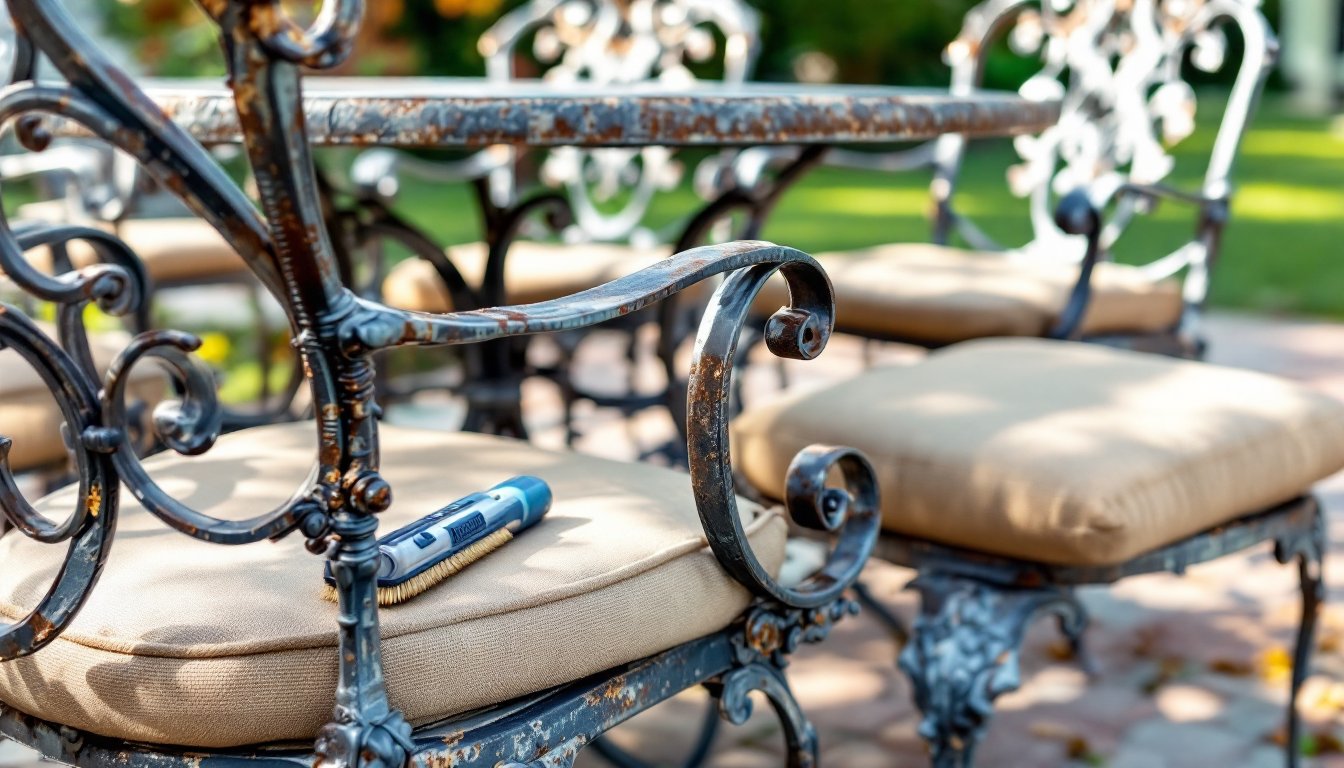
Rust ranges from cosmetic to catastrophic. Light surface rust (orange or reddish discoloration on the outer layer) is normal and easily cleaned with a wire brush and vinegar or a commercial rust remover. Deep pitting, where rust has eaten into the metal, creating small craters, is more serious but still manageable if isolated to non-load-bearing areas like decorative scrollwork.
Structural rust is the deal-breaker. Check welds where legs meet the frame, where arms attach to seats, and where cross-braces connect. If rust has compromised these joints, the piece is unsafe and repairs run $100–$300+ per joint. Use a magnet near joints to confirm it’s still solid metal (rust won’t attract a magnet as strongly as bare iron). Look for cracks in the iron itself, these don’t repair well and indicate the piece has been stressed or is old enough that the iron’s composition has become brittle.
Listen for rattles or movement when you shift the piece. Loose legs or wobbly frames mean worn joints or corroded fasteners. Tighten bolts if present, but if movement persists, the underlying iron or welds are compromised.
Evaluating Cushions and Upholstery
Old cushions often aren’t worth saving. Outdoor fabrics degrade under UV exposure, moisture, and temperature swings. Check for mold, mildew smell, water stains, or compressed foam that doesn’t bounce back. If cushions are original and 10+ years old, budget $50–$150 per cushion for replacement covers or new cushion inserts.
Some buyers prefer bare wrought iron, no cushions. If that’s the plan, inspect the seating surfaces and backrest edges for sharp spots or excessive roughness. Light grinding smooths these, but deep gouges or cracks in the iron are structural concerns. Press on cushion corners and seams for hidden water damage: a damp feeling or smell means internal decay.
Where to Find Quality Used Wrought Iron Furniture
Online marketplaces like Facebook Marketplace, Craigslist, and OfferUp are go-to sources for local buys that let you inspect in person. Search terms like “wrought iron patio set,” “cast iron furniture,” or “vintage outdoor chairs” yield results quickly. Browse photos carefully, sellers often post multiple angles, which reveal rust, damage, or missing pieces.
Estate sales and auctions are goldmines. Many mid-century and older homes contain wrought iron sets originally bought from high-end outdoor furniture shops. Local estate sale companies (searchable by city online) post inventories before auctions, so you can cherry-pick what interests you. Auction houses often allow previews 24–48 hours before sale, giving time to inspect thoroughly.
Antique malls and vintage furniture shops carry wrought iron regularly. Prices are higher than private sales (shops mark up 30–50%), but pieces are often vetted, and you get a return window. Shops also handle transport for a fee, saving you logistics headaches.
Flea markets and outdoor antique fairs happen seasonally in most regions. Arrive early for selection, bring a measuring tape, and haggle, vendors expect negotiation at markets. Inspect under good daylight: don’t rely on vendor lighting to miss flaws.
Pricing and Negotiating Smart Deals
Used wrought iron chair prices typically range $40–$150 each, depending on condition, design complexity, and whether cushions are included. A dining set (table plus four chairs) in good condition averages $300–$800. Loungers and chaise pieces run $150–$400. Sectionals or conversation sets (sofa plus chairs) often fetch $500–$1,500 used.
Local market, seller urgency, and condition shift prices. A pristine vintage set from a high-end designer commands premium prices. A piece with moderate rust and worn cushions goes for less, which is fine if you plan cosmetic restoration.
Negotiation is standard in private and flea market sales. Start 10–20% below the asking price, point out any wear or needed maintenance, and cite what similar pieces cost nearby. If buying multiple pieces, offer a bundle discount, sellers prefer one transaction. For online sales, ask if the seller is flexible: many are, especially if they’re clearing space.
Don’t nickel-and-dime on inspection. Pay a small delivery fee if the seller offers it, or arrange pickup yourself. Hidden damage discovered after purchase, outside the sale window, is your loss.
Maintenance and Restoration Tips
Once you’ve brought used pieces home, a cleaning and inspection routine prevents long-term rust. Dust and hose down furniture monthly (or after rain) to remove debris and standing water. Standing water in crevices and decorative areas feeds rust, so wipe dry or flip cushions to air underneath.
Surface rust requires a wire brush, fine steel wool, or a rotary tool with a wire wheel attachment. After scrubbing, wipe clean and immediately apply a rust-preventative coating. Rust-Oleum Metallic or Tremclad Oil-Based Enamel are common choices for wrought iron. Apply two coats, letting each dry fully. This seals bare metal and keeps surface rust at bay for 2–3 years.
For heavier rust or pitting, use a phosphoric acid-based rust converter (like Naval Jelly or Evap-O-Rust). These chemically convert rust to a stable coating that can then be painted. Follow product directions, most require soaking or multiple applications. Wear nitrile gloves, eye protection, and work in ventilation: these products are caustic.
Cushions degrade faster than iron. Replace covers every 3–5 years or when fading, mold, or mildew appears. New outdoor cushion covers cost $30–$80 each: custom cushions run $100–$200 per piece. Many upholsterers offer outdoor fabric options rated for UV and moisture resistance, check local shops or online custom cushion makers.
Store cushions indoors during winter or in a breathable storage bag if left outside. Leaving damp cushions on furniture overnight invites mold: flip them weekly to ensure air circulation underneath.
The Takeaway
Used wrought iron patio furniture delivers the durability and elegance of premium outdoor pieces at accessible prices. Smart shopping, inspecting for structural integrity, understanding where rust is fixable versus terminal, and knowing fair pricing, turns secondhand hunting into a rewarding hunt. With regular maintenance and the occasional refresh of cushions or rust treatment, a used wrought iron set becomes the anchor of a backyard that looks put-together and stands up to years of use. Whether you’re furnishing a first outdoor space or upgrading an existing one, buying used wrought iron is a practical choice that pays dividends in both budget and sustainability.