
Table of Contents
ToggleCreating a Mediterranean bedroom doesn’t require a coastal property, just thoughtful selection of furniture and design elements that evoke that sun-soaked, relaxed aesthetic. Mediterranean bedroom furniture combines warm materials, earthy tones, and rustic craftsmanship with unexpected comfort and functionality. Whether someone is drawn to terracotta, distressed wood, or wrought iron details, the style celebrates both beauty and livability. This guide walks through the core elements that define Mediterranean design, the specific pieces needed, and how to avoid a themed-costume look by balancing authenticity with modern bedroom expectations.
Key Takeaways
- Mediterranean bedroom furniture prioritizes authentic, solid materials like aged oak, wrought iron, and ceramics that visibly show their history and craftsmanship rather than hide it.
- A warm, muted earth-tone color palette featuring terracotta, ochre, cream, and soft blue-gray creates a restful atmosphere that echoes natural Mediterranean landscapes.
- Essential Mediterranean bedroom furniture pieces include a substantial wooden bed frame, simple wooden nightstands, a functional dresser or armoire, and a seating area to authentically capture the style.
- Balance tradition with modern comfort by pairing Mediterranean furniture with high-quality mattresses, subtle ambient lighting, quality textiles, and discreet contemporary conveniences like charging ports.
- Mediterranean design gains authenticity through lived-in practicality and gradual layering of pieces rather than attempting an all-at-once styled look.
What Defines Mediterranean Bedroom Furniture
Mediterranean design draws from coastal regions around southern Spain, Italy, Greece, and North Africa. It’s not one fixed style, it’s a loose aesthetic built on centuries of adapting to warm climates, limited resources, and a preference for gathering and relaxation. The heart of Mediterranean furniture is honesty: pieces show their joints, wood grain, and age without apology. A Mediterranean bed frame isn’t hidden under drywall: it’s part of the visual story. Materials are solid and tactile, aged oak, olive wood, wrought iron, and hand-fired ceramics dominate. Decoration comes from texture and patina rather than ornate carving or high-gloss finishes. This is why Mediterranean furniture feels both grand and unpretentious: it earns its presence through material integrity, not flash.
Essential Design Elements and Materials
The foundation of Mediterranean bedroom furniture rests on a few core materials. Solid wood, oak, walnut, and reclaimed pine, forms the structural backbone of beds, nightstands, and dressers. This wood is typically left unfinished or given a light stain and matte varnish to preserve its natural grain and show wear patterns over time. Wrought iron appears in bed frames, headboards, and decorative brackets: it’s forged rather than cast, creating visible hammer marks and organic curves that signal handwork. Terracotta and ceramic tiles work into accent walls or drawer fronts, bringing warmth and visual interest. Rattan and woven materials, basket weaves in headboards, woven side tables, add softness and echo natural textures found throughout Mediterranean regions. Upholstery typically uses linen or heavy cotton in neutral shades, chosen for durability and the way fabric ages gracefully. Metals favor bronze and aged iron over polished brass or chrome. The unifying principle: materials should show their age and origin rather than hide them.
Color Palettes That Bring the Mediterranean Home
Mediterranean bedrooms live in warm, muted earth tones that reflect natural landscapes and sun-bleached exteriors. Terracotta, ochre, warm beige, and soft cream form the primary palette. Wall colors typically stay pale, creamy whites, soft terracotta, or pale blue-gray reminiscent of weathered shutters, so furniture and natural light become the focal points. Accent colors arrive through textiles and art: deep indigo, faded teal, burnt orange, and dusty sage green. Navy blue isn’t Modern Mediterranean: it’s more contemporary coastal. Instead, look for colors that appear naturally aged, think sun-faded linens and pigments that recall fresco painting. Warm blacks and deep browns work in wrought iron, carved wood trim, and shadow areas of the room. The effect shouldn’t feel saturated: every color should look like it’s been softened by Mediterranean sunlight and salt air. Layering warm neutrals creates depth without visual strain, making the bedroom feel restful rather than staged.
Key Furniture Pieces for Your Mediterranean Bedroom
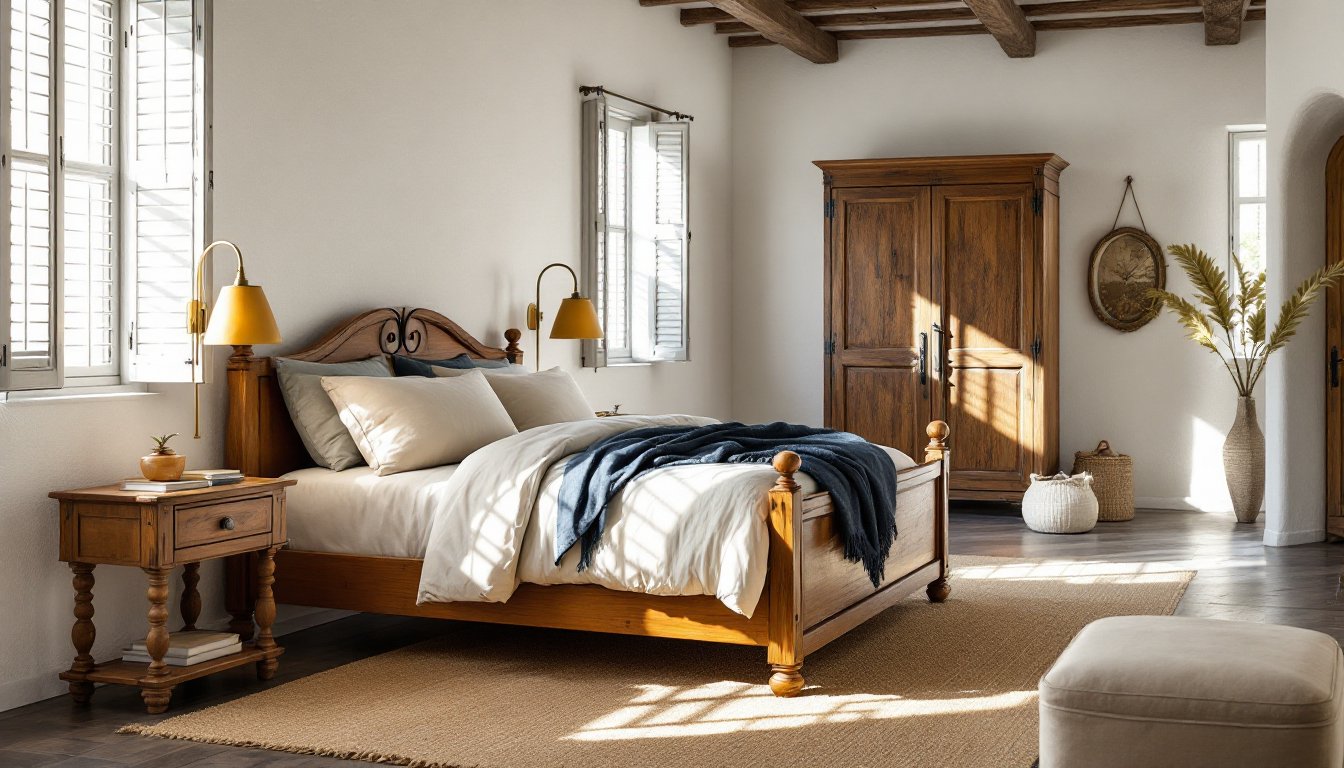
Start with a Mediterranean bed frame, the room’s anchor. Look for solid wood with visible joinery, turned posts, or wrought iron details. A carved wooden headboard or iron-scrolled frame signals authenticity: platform beds with low profiles also work well. The frame should feel substantial, not flimsy or overly modern. Nightstands pair naturally with the bed: opt for wooden tables with simple turned legs, a single drawer, and an open shelf. Metal hardware (iron rings, bronze pulls) reinforces the aesthetic. A dresser or armoire in solid wood becomes functional art, deep drawers, possibly with recessed panels or ceramic knobs, and enough weight to anchor the room. Iron corner braces or decorative handles add character. Bedside storage, a low wooden chest or bench at the foot of the bed, echoes traditional Mediterranean sleeping quarters where seating and storage merged. Upholstered in linen or natural fabric, it offers both function and visual softness. Add a small accent chair or reading nook with a wooden frame and neutral cushions: Mediterranean bedrooms traditionally had a place to sit and rest during the heat of the day. Avoid built-in closets if possible: a wooden wardrobe or armoire keeps the aesthetic intact and more flexible for future moves.
Creating Balance: Mixing Styles and Modern Comfort
A common mistake is treating Mediterranean furniture as historical reenactment, all rough wood, no modern mattress quality, and zero electrical outlets. The goal is authentic materials with contemporary comfort standards. Pair that beautiful wooden bed frame with a high-quality innerspring or memory-foam mattress. Use proper box springs or a platform support rated for your mattress type. Install ambient lighting thoughtfully: soft brass or iron sconces flanking the headboard, or a wrought-iron chandelier centered in the ceiling. Wall-mounted reading lights preserve sightlines and avoid the clunky bedside lamp. Textiles soften the look, layer linen sheets, add woven throws, and place natural fiber rugs (jute, seagrass) under the bed or in a seating area. Mix in modern conveniences discreetly: USB charging ports built into nightstands, blackout liners inside simple linen curtains, and temperature-controlled bedding so the room works year-round. The key is balance: Mediterranean furniture can absolutely coexist with a smart thermostat, quality insulation, and a phone charger. The style gains strength when it’s lived-in and practical, not precious or untouchable.
Conclusion
Mediterranean bedroom furniture creates a sanctuary that feels both grounded in tradition and genuinely livable. By anchoring the room with solid wood pieces, respecting natural materials, and choosing a warm, earthy palette, anyone can evoke the unhurried sense of a coastal refuge. The style works because it prioritizes substance over trend, it ages well, tells a story through patina and wear, and welcomes real life without pretense. Starting with a solid bed frame, layering in thoughtful textiles, and adding pieces gradually ensures the room evolves authentically rather than arriving fully styled overnight.