Table of Contents
ToggleCountry cottage dining room furniture brings warmth, character, and timeless appeal to one of the home’s most important gathering spaces. Unlike trendy design approaches that fade in a few years, the cottage aesthetic draws from centuries of practical farmhouse traditions and deliberately worn finishes that only look better with age. Whether someone is renovating a period home or simply craving the cozy, unpretentious charm of cottage style, understanding the core elements, from wood choices to color palettes, makes the difference between a space that feels authentic and one that falls flat. This guide walks through everything needed to create a dining room that balances function with that coveted lived-in elegance.
Key Takeaways
- Country cottage dining room furniture prioritizes authentic craftsmanship, solid wood, and deliberately worn finishes that improve with age rather than follow fleeting design trends.
- A well-appointed cottage dining room centers on a solid wood table (6–8 feet long), mismatched or simply-designed chairs, and functional storage like sideboards or open shelving to balance aesthetics with practicality.
- Choose soft, muted color palettes—creams, sage green, soft gray, and pale blue—applied in hand-sanded, layered finishes using chalk paint or milk paint to achieve authentic cottage appeal without artificial distressing.
- Cottage style celebrates imperfection and honest construction details: visible joinery, warm wood tones, natural fibers like linen and canvas, and a mix of painted and stained pieces that feel collected over time.
- Lighting, minimal accessories, and simple wall treatments like wainscoting complete a cottage dining room that feels lived-in and welcoming, emphasizing function and comfort over decorative excess.
- Blend reproduction cottage pieces with genuine antiques freely, as the style values practical design and honest materials over trend-driven aesthetics or matching sets.
What Defines Country Cottage Dining Room Furniture
Country cottage furniture isn’t a single style, it’s a sensibility rooted in practicality, craftsmanship, and honest materials. The aesthetic embraces imperfection: hand-planed surfaces, visible joinery, paint finishes that show wear, and wood grain that speaks to the piece’s history. Unlike formal dining furniture with its rigid symmetry and polished surfaces, cottage pieces feel approachable and well-used.
Authentic cottage furniture typically favors solid wood over veneers or particleboard, with an emphasis on local or reclaimed timber. Joints are often visible, mortise and tenon, dovetail, or simple butt joints, rather than hidden. Finishes tend toward matte, chalky paints in heritage colors, waxed wood showing its natural grain, or deliberately distressed surfaces that tell a story. The overall effect is that pieces have been passed down through generations and earned their patina through actual use, not cosmetic aging techniques applied in a factory.
This authenticity matters because cottage style doesn’t demand perfection. A slightly wobbly table leg, a thick coat of primer that’s been hand-sanded, or mismatched chairs pulled together over time all feel correct. The furniture invites use and conversation rather than demanding it be admired from a distance.
Essential Furniture Pieces for a Country Cottage Dining Room
Dining Tables That Anchor Your Space
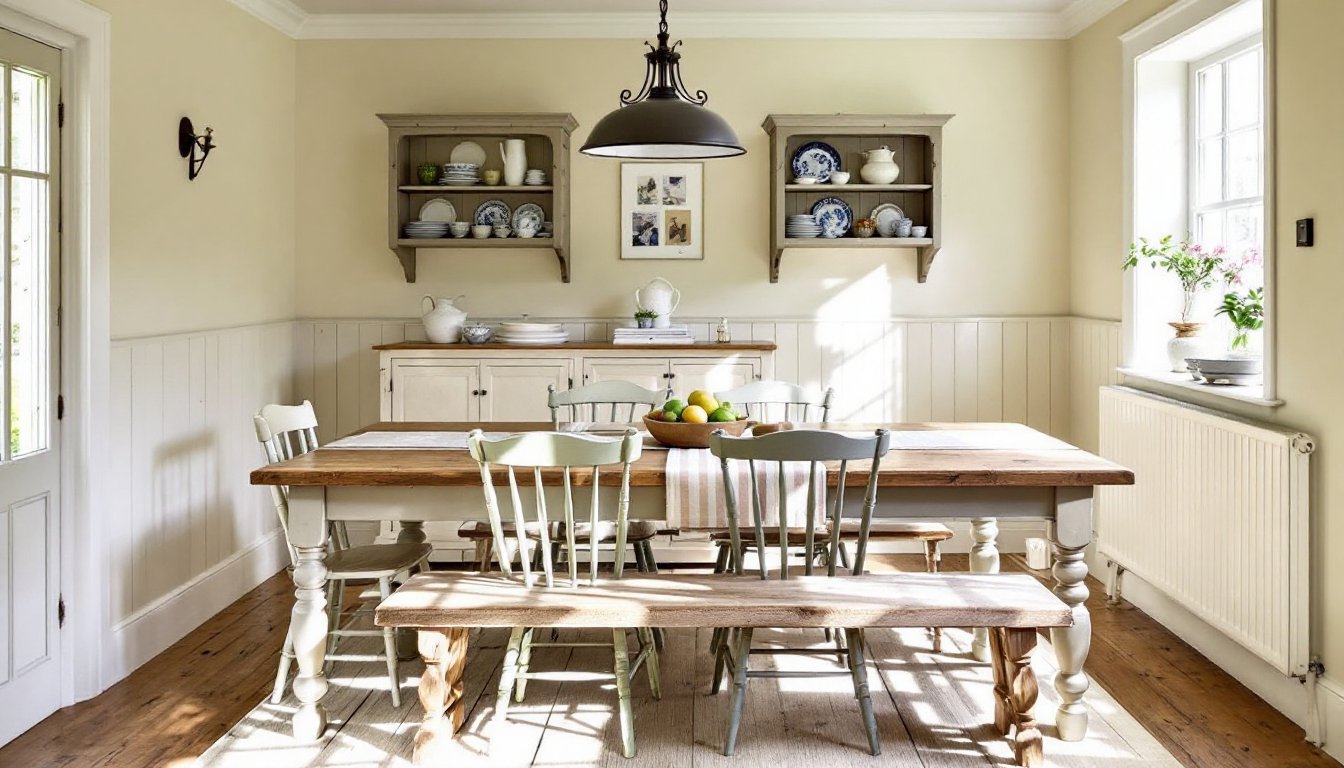
The dining table is the room’s centerpiece and should reflect cottage values: durability, honest construction, and presence. A solid wood table, ideally oak, pine, elm, or reclaimed timber, in the 36–48 inch width range provides comfortable place settings on both sides plus room for serving dishes down the center. Length varies, but a 6–8 foot table works well for most residential spaces and seats six to ten people depending on chair size and spacing.
Look for tables with visible construction details: thick aprons (the horizontal supports running beneath the top), turned or tapered legs, and a finish that shows the wood rather than hiding it. Many cottage tables feature a farmhouse base, a simple pedestal or trestle design, which is easier to walk around than four individual legs. Extending tables with drop leaves or removable leaves are practical for accommodating gatherings without requiring extra floor space year-round.
Reclaimed wood tables carry particular charm but come with trade-offs. They’re typically one-of-a-kind, may show nail holes or old hardware attachment points, and cost more than new reproductions. Newer cottage-style tables from dedicated makers often nail the aesthetic while offering more consistent dimensions and easier repairs if needed.
Chairs and Seating Options
Cottage dining calls for mismatched or simply-designed chairs rather than a formal matched set. Consider ladderback, spindle-back, or rush-seat chairs, styles that date back centuries and remain functional and beautiful. Paint them in heritage colors (soft cream, gray-green, muted blue) or leave them natural wood with a matte finish.
Windsor chairs and bentwood designs also suit cottage aesthetics and are widely available in reproduction form. If matching is preferred, one style in slightly varying finishes (some painted, some stained) creates intentional variety without looking accidental. Seat cushions in linen, canvas, or gingham add comfort and color without overwhelming the look.
Bench seating along one or both sides of the table is quintessentially cottage, practical, space-efficient, and welcoming. A simple wooden bench with a painted base and natural top, or upholstered with a casual fabric, grounds the room and invites lingering conversations over meals.
Storage Solutions and Sideboards
Functional storage separates a cottage dining room from a space that merely looks cottagelike. Sideboards, dressers, and open shelving aren’t decorative afterthoughts, they hold linens, serving dishes, and everyday dishes, keeping the table clear and the room organized.
Sideboards and buffets in cottage style typically feature simple, sturdy construction with 2–3 drawers and cabinet space below, standing about 36 inches tall with 48–60 inch widths. Paint finishes (cream, soft blue, or original worn paint) work beautifully, as does natural wood topped with a matte varnish. Open shelving or glass-front cabinet doors display dinnerware and add visual interest without the heaviness of fully enclosed storage.
Plate racks and open shelving mounted on walls let dishes do double duty: they’re accessible for entertaining and serve as casual décor. Pair this with closed cabinet storage for linens and serving pieces to keep the table clear and functional. Wall-mounted shelves at 36–42 inches above the floor accommodate plates and serving pieces without blocking sight lines across the room.
Reclaimed wood shelving, antique cupboards, or reproductions of traditional corner cabinets round out storage while maintaining the authentic aesthetic. The key is choosing pieces that feel like they’ve found their place naturally, not like they were bought in a matching set.
Color Palettes and Materials That Capture the Cottage Aesthetic
Cottage color schemes draw from nature and heritage paint traditions. Soft whites and creams form the foundation, paired with muted earth tones: sage green, soft gray, pale blue, warm terracotta, and dusty rose. Avoid bright, saturated colors or trendy pastels, cottage palettes feel settled and timeless, as though they’ve faded gently under decades of daylight.
Off-white or primer white dominates cottage furniture, often applied in multiple hand-sanded coats that reveal underlayers of older paint or wood. This creates depth and a convincingly aged appearance without looking artificially distressed. Chalk paint finishes, lime wash, and milk paint all achieve this authentic look naturally because they absorb light differently than modern latex and create real (not faked) texture.
Wood tones lean toward warm and honey-colored rather than dark or highly stained. Natural pine, unfinished oak, or light walnut complement painted pieces without fighting for attention. Mix wood finishes freely, painted base with natural wood top, stained legs with cream body, to mirror how cottages were actually furnished over time as pieces were acquired and refreshed.
Textiles in linen, canvas, and gingham anchor the material palette. Look for these in natural fibers rather than synthetics: they wear differently and develop character. A simple checked or striped runner, linen napkins, and plain cotton curtains complete the picture without clashing or overwhelming the wood tones and painted furniture.
Styling Tips to Complete Your Country Cottage Dining Room
The best cottage dining rooms feel lived-in and functional, not precious or overthought. Start by grouping furniture intentionally: the table as the focal point, with seating and storage flanking it at comfortable distances. Avoid pushing everything to the walls or leaving awkward gaps.
Lighting should be warm and diffused. A simple pendant or chandelier centered above the table works, wrought iron, vintage-style metal, or simple brass all suit the aesthetic. Aim for 30–36 inches of clearance between the fixture and the table surface to keep sight lines open during meals. Candlelight and table lamps provide ambient warmth without relying solely on overhead lights.
Wall treatments might include simple wainscoting (beadboard or shiplap), wallpaper in small-scale patterns or heritage prints, or simply painted walls in one of the signature cottage colors. A chair rail at roughly 36 inches from the floor divides wall space and adds architectural interest without requiring major construction.
Accessorizing should be restrained. A wooden bowl of fruit, a stack of linen napkins, vintage serving pieces on open shelves, and perhaps a simple floral arrangement or potted herbs create visual interest without clutter. The cottage philosophy values function over decoration, if it’s not used or loved, it shouldn’t be there.
Mix old and new thoughtfully. Reproduction cottage pieces often fit seamlessly with genuine antiques because the style emphasizes honest materials and practical design, not trend-driven aesthetics. A newer painted chair sits comfortably beside one found at an estate sale.