Table of Contents
ToggleA well-designed patio transforms a backyard from an overlooked corner into a functional outdoor living room. Whether someone’s planning a weekend gathering or a quiet evening retreat, outdoor patio furniture sets the foundation for comfort and style. The right pieces don’t just enhance curb appeal, they extend usable living space, boost home value, and create lasting memories with family and friends. This 2026 guide walks through selecting durable materials, essential furniture pieces, and design strategies that work for any budget or space size. Skip the guesswork and build an outdoor area that actually gets used.
Key Takeaways
- Quality outer patio furniture lasts 10+ years versus 1–2 years for cheap alternatives, making the higher upfront cost a smart long-term investment.
- Essential outdoor patio furniture includes seating (dining sets, loungers, sectionals), shade solutions (umbrellas, pergolas, awnings), and weather-resistant materials like teak, powder-coated aluminum, and solution-dyed acrylic cushions.
- Material choice depends heavily on climate: coastal areas need corrosion-resistant options, humid regions demand mildew-resistant fabrics, and local weather conditions should guide your selection.
- Design cohesion comes from limiting yourself to two coordinated materials and colors borrowed from your home’s interior, avoiding a cluttered mix of random styles.
- Measure your space carefully and leave 18–24 inches of walking room around furniture, ensuring the dining table sits at least 3 feet from the patio edge for comfortable movement.
- Choose low-maintenance materials like polywood and synthetic wicker if you won’t commit to regular maintenance, since aspirational care routines often lead to neglected, deteriorating pieces.
Why Investing in Quality Outdoor Patio Furniture Matters
Cheap patio furniture often falls apart after a single season of weather exposure. Wood cracks, metal rusts, and cushions fade or mildew within months if they’re made from low-grade materials and weak construction. Quality outdoor patio furniture, by contrast, withstands UV rays, temperature swings, and moisture without constant replacement.
Beyond durability, well-made pieces perform better functionally. A sturdy dining table won’t wobble when serving food: a durable lounger won’t sag under weight after two seasons. These aren’t small details, they’re the difference between enjoying the space and avoiding it because something’s broken.
Investment in quality also pays off financially. A solid teak or powder-coated aluminum dining set may cost 2–3 times more upfront than bargain options, but it’ll last 10+ years versus 1–2 years for cheaper alternatives. That’s a dramatically lower cost per year of use. Plus, quality pieces hold resale value if someone decides to upgrade down the line.
Essential Patio Furniture Pieces for Every Outdoor Space
Seating Options: From Dining Sets to Loungers
Seating is the backbone of any patio. A dining set (table plus chairs) anchors a practical space for meals and gatherings: standard tables range from 48″ to 72″ in length depending on guest count and available space. For casual lounging, lounge chairs or chaise lounges let someone stretch out and relax, look for adjustable backs or reclining mechanisms if budget allows.
Sectionals work well for smaller patios or corner layouts, maximizing seating without eating up square footage. They’re available in modular pieces, so they adapt as needs change. Sofas and conversation sets (chairs facing each other across a low table) create intimate gathering spots perfect for patios tucked against the house.
Consider traffic flow and scale. A massive sectional overwhelms a 12′ × 14′ patio: a small bistro set gets lost in a sprawling yard. Measure the space and leave at least 18–24 inches of walking room around furniture clusters.
Shade and Shelter Solutions
Direct sun turns a patio unusable by midday. Umbrellas are the quickest fix, market umbrellas (6–9 feet wide) anchor to weighted bases or table holes, providing immediate shade without structural work. Pergolas (open-roof structures with slatted beams) filter sunlight while maintaining airflow and sightlines: they’re semi-permanent and sometimes require footings dug below the frost line depending on local codes.
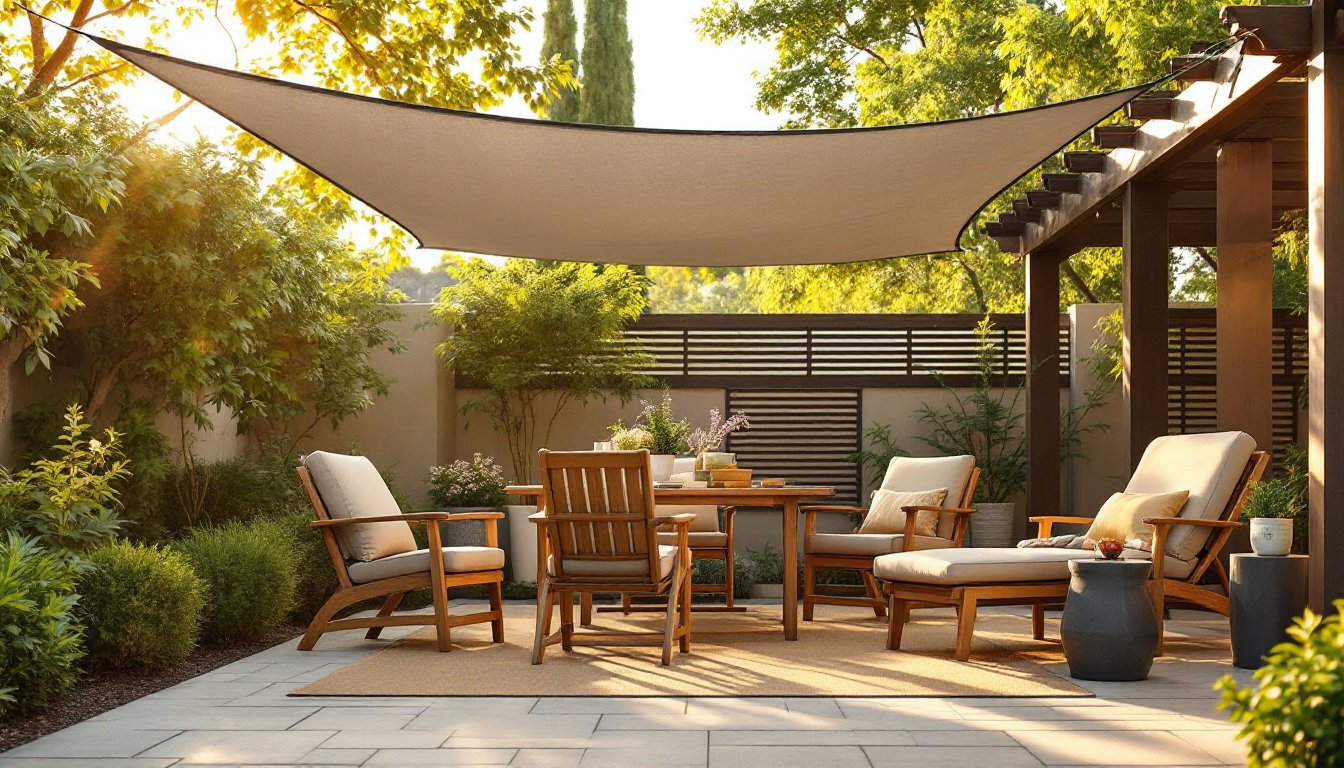
Shade sails (tensioned fabric structures) suit modern aesthetics and tight spaces where traditional pergolas won’t fit. Retractable awnings bolt to the house and extend when needed, ideal for patios directly off sliding doors or windows. All of these reduce surface temperature and UV exposure on furniture, extending its lifespan significantly.
Choosing Materials That Withstand the Elements
Material choice makes or breaks outdoor durability. Teak is a premium hardwood that naturally resists rot and insects: it weathers to a silvery-gray over time and lasts 20+ years with minimal maintenance. It’s expensive, expect $3,000–$8,000+ for a quality teak dining set, but the longevity justifies the cost for serious investors.
Aluminum frames (powder-coated to prevent oxidation) are lightweight, rust-proof, and affordable. They pair well with mesh fabrics or cushions and suit modern or traditional designs. Wrought iron is heavier and more durable but requires repainting every few years to prevent rust if the finish gets scratched.
Wicker or rattan adds warmth and texture: synthetic wicker (resin-based) withstands moisture far better than natural versions. Real wicker eventually frays in wet climates unless stored indoors seasonally. Polywood or recycled plastic lumber mimics wood aesthetics, resists moisture and insects, and never needs staining, a solid middle ground between real wood and synthetic materials.
Cushion fabrics matter equally. Solution-dyed acrylic (like Sunbrella) resists fading and mildew far better than cotton or polyester blends. It costs more but lasts 3–5 years outdoors versus 1–2 years for budget fabrics. Always check care labels, some fabrics require monthly washing to prevent algae growth in humid climates.
Where someone lives influences material choice heavily. Coastal areas need corrosion-resistant materials: humid regions demand mildew-resistant fabrics: arid zones tolerate more finishes. Local climate is the first filter for material selection.
Design Tips for a Cohesive Outdoor Living Area
Cohesion comes from restraint. Pick a dominant material (say, teak with cushions) and a secondary accent (perhaps wrought iron accents or a polywood side table). Mixing teak, wicker, aluminum, and plastic randomly reads as cluttered: sticking to two coordinated materials feels intentional and designed.
Color palettes borrowed from house interiors carry through outdoors smoothly. If the interior leans warm tones, select rust, terracotta, or taupe cushions: cool-toned homes pair better with blues, greens, or grays. Neutral cushions work everywhere and age gracefully: bold colors date faster and fade under sun exposure.
Scale and proportion matter more than most assume. Oversized furniture on a tiny patio feels cramped: undersized pieces on a sprawling yard look insufficient. A good rule: the dining table should sit at least 3 feet from the patio edge on all sides for comfortable movement and sightlines.
Layer textures and heights to avoid monotony. Tall shade structures, a dining table, loungers of different heights, and ground-level planters create visual interest without clutter. Group seating into zones (dining area, lounging area, conversation corner) so the space feels intentional rather than random placement.
Finally, account for maintenance honestly. Teak requires annual oiling if appearance matters: cushions need regular cleaning in humid areas: painted finishes need touch-ups every few years. Low-maintenance options (polywood, synthetic wicker, Sunbrella cushions) cost more upfront but save headaches long-term. Choose based on actual willingness to maintain, not aspirational effort.
Conclusion
Building an outdoor patio furniture collection that lasts requires understanding materials, matching pieces to space, and accepting that quality costs more because it performs better. Durable seating, appropriate shade, and thoughtful color choices transform a backyard into a genuinely usable extension of home. Start with the essentials, a solid dining or lounge set, weatherproof shade, then layer in pieces as budget and space allow. The goal isn’t a magazine-perfect patio: it’s a functional outdoor room that invites relaxation and brings the family together season after season.