Table of Contents
ToggleThe modern master bedroom has evolved beyond a simple sleeping space. Today’s homeowners expect a personal retreat that balances clean lines, functional storage, and genuine comfort. Whether someone is furnishing a new bedroom or refreshing an existing one, understanding contemporary design principles makes the difference between a room that merely looks trendy and one that truly works. Modern master bedroom furniture emphasizes simplicity, intentional design, and materials that age well. This guide walks through the essential pieces, design strategies, and practical decisions needed to create a bedroom that feels both current and timeless.
Key Takeaways
- Modern master bedroom furniture prioritizes clean lines, functional storage, and proportionate pieces that eliminate visual clutter while maximizing comfort and usable floor space.
- Apply the 60-30-10 color rule—60% neutral base, 30% secondary tones, and 10% accent—to prevent chaos and maintain the timeless, contemporary aesthetic modern design demands.
- Platform beds with integrated under-bed storage and floating nightstands are essential modern choices that free up floor space and create the open, grounded look contemporary bedrooms require.
- Material selection and finishes matter: favor natural wood (walnut, white oak), brushed metals, and matte finishes over glossy or ornate pieces that date quickly.
- Invest in sleep fundamentals and layered lighting (task lights, wall-mounted readers, dimmers) rather than trendy pieces—a quality mattress and proper illumination transform comfort in modern master bedroom design.
- Smart storage solutions like built-in shelving and low-profile dressers keep daily items organized and hidden, preventing the modern space from feeling cluttered or staged.
Understanding Modern Master Bedroom Design Principles
Modern design in the bedroom context means stripping away excess and focusing on what actually matters: restful sleep, easy movement, and intentional aesthetics. The core principle is form following function, every piece of furniture should earn its place through utility or genuine visual impact.
One foundational rule is the 60-30-10 color split. Sixty percent should be a neutral base (typically wall color or bedding), thirty percent a secondary color or finish (wood tones, soft grays), and ten percent an accent through artwork, pillows, or a single statement piece. This prevents the room from feeling chaotic while allowing for personalization.
Scale matters tremendously. A modern bedroom benefits from proportionate furniture, oversized ornate pieces feel out of place. Instead, opt for streamlined silhouettes with minimal ornamentation. Negative space (empty wall area and floor space) is a design element itself: rooms feel larger and calmer when they’re not packed with furniture.
Clear sightlines also contribute to the modern feel. This means choosing beds and nightstands with visible legs rather than skirted bases, which creates a lighter visual impression. The bedroom should feel open, even if it’s modest in size.
Essential Furniture Pieces for a Contemporary Master Bedroom
Platform Beds and Minimalist Frames
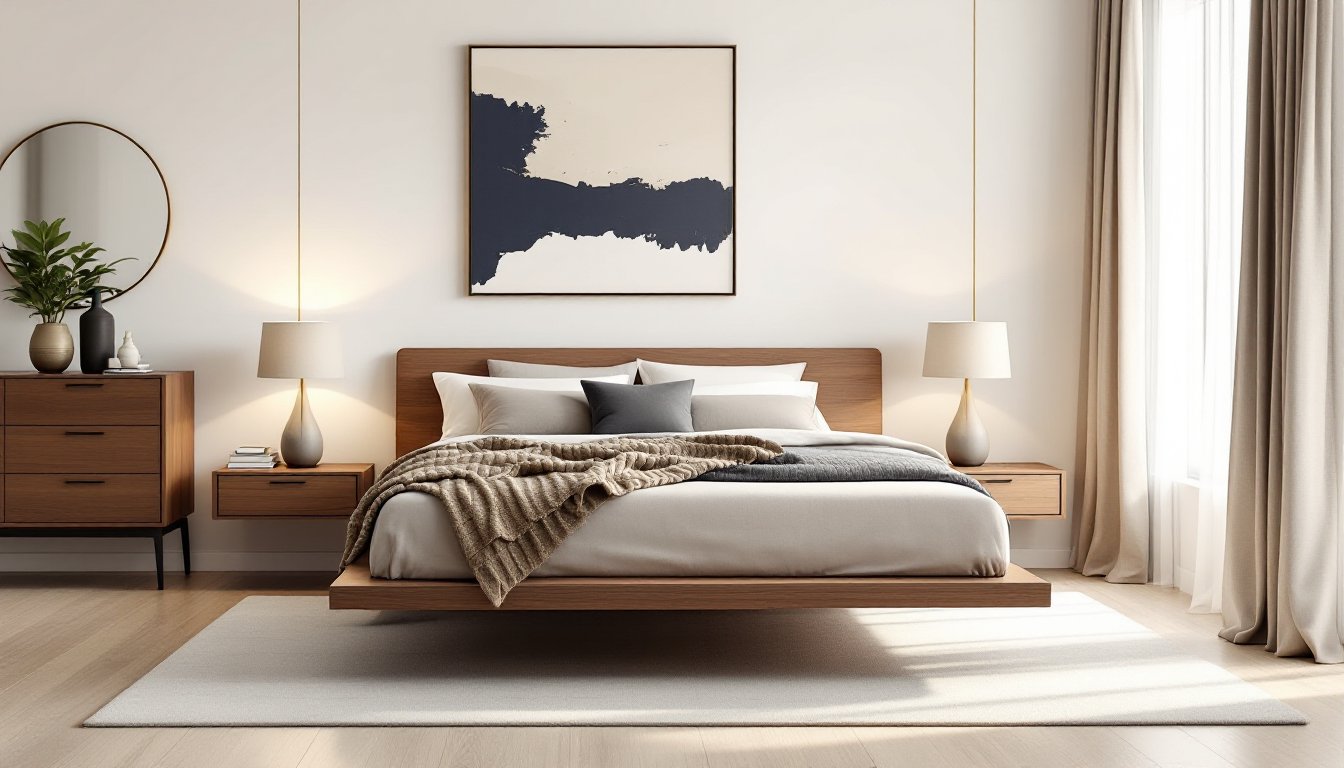
The bed anchors any bedroom design, and modern options have moved far from traditional box springs and ornate headboards. A platform bed eliminates the need for a separate box spring, resting the mattress directly on a slatted or solid base. This creates a lower, more grounded visual profile, a hallmark of contemporary style.
Minimalist bed frames typically feature low profiles (usually 12–18 inches from floor to mattress top), clean wood finishes in walnut or white oak, or upholstered designs in neutral fabrics like linen or performance textiles. Look for frames with integrated under-bed storage drawers: this solves the classic problem of “where to put extra bedding or seasonal items” without adding separate furniture.
When selecting a bed frame, verify mattress compatibility. A queen-size mattress measures 60 by 80 inches: king is 76 by 80 inches. Ensure the frame accommodates your mattress type (memory foam, hybrid, or traditional coil). Platform beds work exceptionally well with memory foam and hybrid mattresses, which need solid support rather than traditional box springs.
Nightstands and Smart Storage Solutions
Modern nightstands have evolved into hybrid pieces that combine storage, charging capability, and minimal visual weight. Instead of traditional nightstands with drawers, contemporary options often feature open shelving, floating designs, or wall-mounted models that free up floor space and create a cleaner look.
A practical modern nightstand should include: a charging surface (ideally with integrated outlets or USB ports), a small drawer for personal items, and an open shelf for a lamp or book. Dimensions typically run 20–24 inches wide, 16–18 inches deep, and 24–28 inches tall, roughly level with the top of the mattress for comfortable reach.
Consider floating nightstands (mounted directly to the wall) for a truly minimal aesthetic. These require stud-mounted brackets rated for at least 25–30 pounds per side. If the bedroom has drywall between studs, install blocking or use heavy-duty toggle bolts rated for appropriate weight.
Beyond nightstands, built-in or low-profile dressers work better in modern spaces than tall, ornate pieces. A dresser 30–36 inches tall with clean lines, recessed handles, and organized drawers keeps clothing accessible without dominating the visual space.
Materials, Finishes, and Color Palettes in Modern Design
Material selection defines whether a bedroom feels modern or dated. Contemporary bedrooms favor natural wood (walnut, white oak, or ash), metal frames (steel or iron), and quality upholstery. Avoid heavily stained or oversized furniture with carved details, these read as traditional regardless of the style name printed on the invoice.
Finish options for wood furniture include natural (clear oil or wax), matte stains, or whitewashed effects. Matte finishes (non-glossy) feel more current than high-gloss, which can look plastic or overly formal. Metal components should lean toward brushed stainless, matte black, or bronze rather than shiny chrome.
Color-wise, modern bedrooms typically anchor on neutrals: soft whites, warm grays, warm beiges, or muted greens and blues. These aren’t bland, they’re just not competing for attention. The magic happens through texture: linen bedding, wool area rugs, soft throws, and wood grain variations add visual interest without clashing.
An accent wall using a slightly deeper neutral or a soft jewel tone (navy, forest green, dusty mauve) works in modern spaces when kept simple. Avoid bright or primary colors, which feel less sophisticated. Textured wallpaper or shiplap can add depth if you prefer dimensional interest over paint alone.
Layering textures is key. Pair a smooth upholstered headboard with rough linen pillows, smooth wood nightstands with a chunky knit throw. This prevents the room from feeling flat or sterile, which can happen if everything is too uniform.
Creating Functionality and Comfort in Your Modern Master Suite
Modern design isn’t about sacrificing comfort for aesthetics. The best contemporary master bedrooms feel as good as they look. This starts with sleep fundamentals: a quality mattress (typically $800–2000+ for a queen, depending on brand and construction), supportive pillows, and breathable bedding. Don’t skimp here, sleep quality is the whole point.
Storage integration separates a well-designed modern bedroom from one that looks nice but falls apart practically. Built-in shelving or a low credenza (a long, low storage cabinet) along one wall can replace a traditional dresser while visually anchoring the space. Open shelving for decorative items works, but pair it with closed storage for daily-use items to keep the visual landscape clean.
Lighting deserves serious attention. Overhead ceiling fixtures often feel institutional. Instead, layer lighting with: a bedside task light (a table lamp with a clean, minimal shade, typically 18–24 inches tall), a wall-mounted reading light on each side of the bed (no nightstand clutter), and soft ambient light from a dimmable ceiling fixture or warm LED strips behind a floating shelf. Dimmers allow you to adjust mood without feeling like you’re in a hotel.
Windows benefit from simple treatments. Sheer white or warm gray linen curtains maintain the clean aesthetic while allowing light control. Heavy blackout shades work but should be hidden in a headrail system that keeps them completely out of sight when raised.
Temperature and air quality matter more than most people realize. A modern bedroom isn’t just furniture, it’s an environment. Consider a quality air purifier if the room faces a busy street, and invest in blackout solutions if outside light disrupts sleep. These aren’t glamorous upgrades, but they directly impact the room’s actual function as a refuge.
Conclusion
Creating a modern master bedroom doesn’t require following rigid rules or spending a fortune on trendy pieces that’ll feel dated in two years. The foundation is choosing quality, proportionate furniture with clean lines, neutral colors, and thoughtful materials. Add genuine comfort through a good mattress, proper lighting, and smart storage that lets you actually live in the space rather than just display it.
The goal is a room that feels both current and timeless, a place where a homeowner genuinely wants to spend time, not just sleep. That balance between aesthetic and function is what separates modern design from passing trends.