Table of Contents
ToggleGone are the days when patio furniture had to match perfectly or come from a single set. Today’s outdoor spaces thrive on personality and intentional mixing. Mix and match patio furniture allows homeowners to blend styles, materials, and colors to create a cohesive yet unique retreat without breaking the budget. Whether someone is updating an existing patio or building from scratch, understanding how to layer different pieces transforms an ordinary backyard into an inviting outdoor room. The key lies not in everything looking identical, but in strategic choices that tie the space together through color, texture, and proportion.
Key Takeaways
- Mix and match patio furniture eliminates the sterile, one-designer-fits-all limitations of matching sets while allowing you to blend styles, materials, and colors into a cohesive outdoor retreat.
- Anchor your space with a neutral color base and one or two accent colors repeated throughout cushions, planters, and accessories to tie together different furniture pieces visually.
- Balance hard and soft textures intentionally—combine metal, wood, wicker, and stone in appropriate proportions to create a designed, intentional look rather than an accidental mismatch.
- Invest in quality anchor pieces like a durable dining table or main seating platform, then supplement with budget-friendly or secondhand finds from off-season sales and big-box retailers.
- Avoid common pitfalls like using more than three accent colors, mismatched seat heights, or overcrowding your patio—scale matters as much as style when mixing furniture styles.
- Choose materials with similar durability levels or expect to replace cheaper pieces sooner; mixing teak with low-quality plastic wicker leads to uneven weathering and a less polished aesthetic.
Why Mix And Match Patio Furniture Works
Matching furniture sets feel sterile and limit creativity. When someone commits to a single collection, they’re locked into one designer’s vision and often stuck with pieces that don’t actually suit their space or needs.
Mix and match patio furniture solves this by offering flexibility. A homeowner can invest in a high-quality dining table they love, then pair it with affordable bistro chairs, add a vintage bench for extra seating, and top it off with modern side tables from a completely different source. The result feels intentional rather than mismatched.
This approach also spreads out costs. Instead of dropping $3,000 on a matching set all at once, someone can build their patio gradually, replacing and upgrading pieces over time. Budget-friendly finds from big-box stores work alongside higher-end investments without creating visual chaos.
Psychologically, a layered patio reflects who actually lives there. It tells a story through different styles, eras, and finishes, making the space feel personal and welcoming rather than like a showroom.
Key Design Principles For Cohesive Outdoor Spaces
Creating a cohesive mix and match patio comes down to a few foundational rules. These principles prevent the space from feeling chaotic while keeping it visually interesting.
Color Coordination And Contrast
Start with a neutral base. A black, dark gray, or weathered wood frame keeps varied pieces from clashing. From there, introduce one or two accent colors that repeat throughout the space, cushions, planters, throw pillows, and umbrellas are easy ways to anchor the palette.
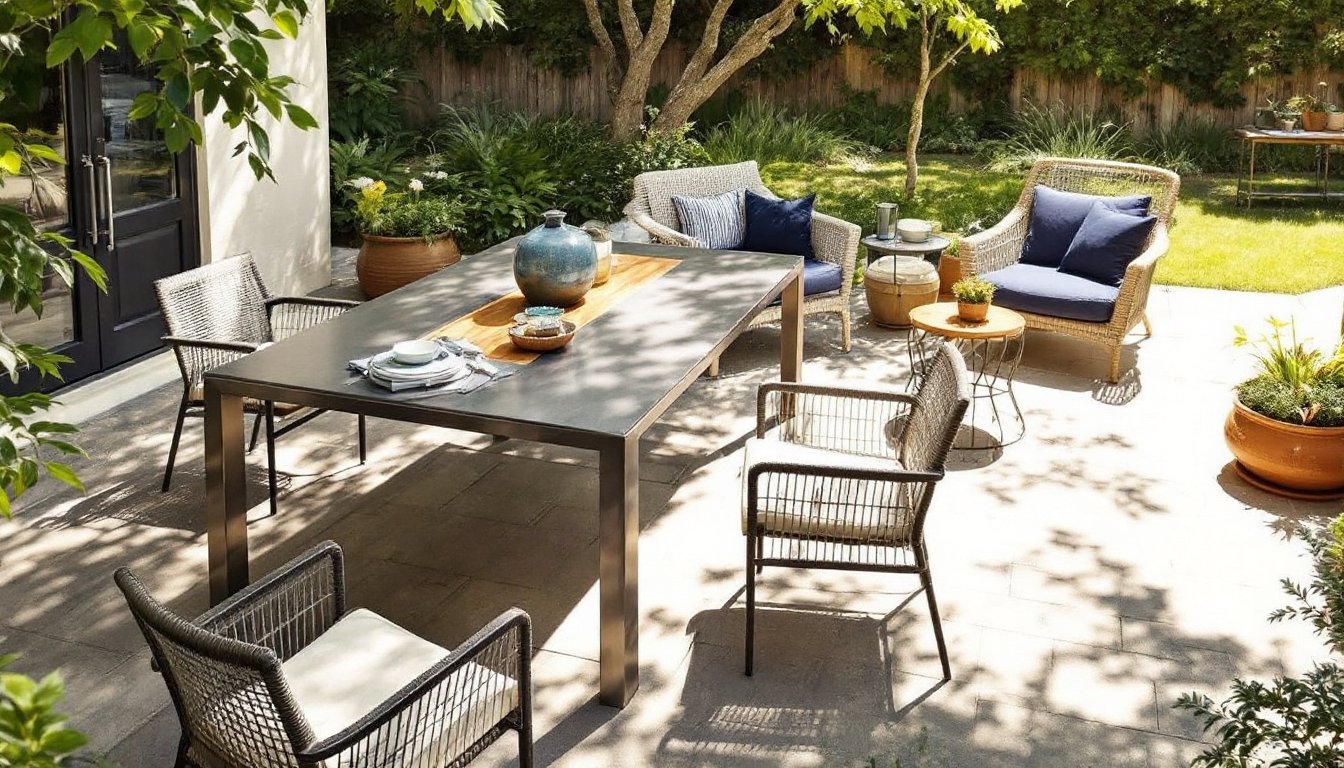
For example, a gray metal dining set pairs beautifully with white cushions and terracotta accents. Then add wooden lounge chairs or rattan side tables to introduce texture and warmth. The neutral bones allow each piece to breathe while the repeated accent colors tie everything together.
Contrast is also your friend. A modern white metal chair looks sharp next to a rustic wooden bench if both anchor to the same color story. Deep jewel tones, emerald, navy, or rust, work well as accent colors because they add richness without requiring perfect tonal matches.
Material And Texture Balance
Mix hard and soft textures intentionally. Metal frames, wood, wicker or rattan, and stone play well together when proportioned right. A common mistake is using all soft materials (too floppy) or all hard materials (too cold).
If the dining set is all metal and glass, anchor the seating area with wood or wicker lounge chairs. A concrete patio table pairs perfectly with wooden benches and metal stools. Layering materials makes the space feel designed rather than accidental.
Consider durability, too. Teak or cedar wood withstands weather well and ages gracefully. Powder-coated aluminum resists rust. Polypropylene wicker holds up better than natural rattan in harsh climates. Knowing what materials suit your local weather prevents the space from deteriorating unevenly, which would expose your mixing strategy as less intentional than it actually is.
Popular Furniture Combinations To Consider
Real-world combinations show how to make mix and match work in practice.
Metal Dining + Wooden Seating is a timeless pairing. A steel or aluminum dining table with simple lines accommodates wooden chairs, benches, or a mix of both. Metal frames feel modern: wood adds warmth. Add cushions in one color to unify the look.
Upholstered + Non-Upholstered creates visual interest without overwhelming. Place an upholstered sectional or sofa as the main seating, then surround it with wood or metal chairs and side tables. The cushioned piece anchors: the harder pieces keep things from feeling too soft or precious.
Vintage Finds + New Basics appeals to budget-conscious planners. A solid modern metal dining set becomes special when paired with vintage wooden chairs, an old painted garden bench, or reclaimed wood side tables. The new pieces ground the aesthetic: vintage finds add personality.
Wicker Lounge + Dining Variety works for split-function patios. Use rattan or wicker lounges and poufs in the relaxation zone, then employ totally different seating, wooden stools, metal chairs, even mismatched dining chairs, around the table. Cushions and throw pillows in coordinating colors tie zones together visually.
Budget-Friendly Tips For Mixing Styles
Mixing and matching inherently costs less than buying full sets, but a few strategies stretch dollars even further.
Buy Your Anchor Pieces New. A dining table or main seating platform should be sturdy, weather-resistant, and something you’ll keep for years. Invest here. Metal dining tables with sealed wood tops offer longevity and style for $400–$800. Then supplement with secondhand or budget-friendly finds.
Hunt for Off-Season Sales. Patio furniture goes on clearance in late August and again in October. Mid-range retailers often discount 40–60% at season’s end. A $300 dining chair becomes $90. Snag quality pieces when prices drop, even if you don’t need them immediately.
DIY Refinishing. A thrifted wooden chair with a cheap stain job transforms with two coats of your chosen paint and new cushions. Outdoor-grade paint or stain costs $15–$30 per can. A can covers roughly 400 square feet depending on the product, plenty for a few chair sets.
Skip Matching Cushions. Buy cushions separately in your accent color rather than as part of a bundle. Individual cushions run $20–$40: bundled sets cost more. Mix cover patterns lightly (solid, subtle stripes) as long as the color family stays consistent.
Maximize Affordable Retailers. Big-box stores stock solid metal chairs, wood stools, and basic tables at accessible prices ($50–$200). These work as secondary pieces or fill-in seating without eating your budget.
Common Mistakes To Avoid
Mix and match fails when it abandons strategy. Watch for these pitfalls.
Too Many Colors. More than three accent colors looks scattered. Stick to two colors maximum, plus neutrals. A gray table, navy cushions, and terracotta accents work: adding red, green, and yellow doesn’t.
Ignoring Scale and Proportion. A tiny bistro table surrounded by oversized lounges feels awkward. A massive sectional with tiny side tables looks off-balance. Visualize the entire arrangement before buying. A dining table for six needs chairs and space around it: a small four-top doesn’t.
Mismatched Seat Heights. Dining chairs should sit 10–12 inches below the table surface: mixing wildly different heights creates an uncomfortable, unprofessional look. When combining chair styles, check dimensions first.
Weathering Unevenly. Cheap plastic wicker and premium teak side by side means one ages gracefully while the other cracks and fades. Choose materials in a similar durability tier, or plan to replace cheaper pieces sooner.
Overcrowding. A patio furniture yard sale vibe happens when every spare corner holds a chair, table, or planter. Negative space is design, too. Leave room to walk and sit comfortably. Four good pieces beat eight cramped ones.