
Table of Contents
ToggleKey Takeaways
- A consistent color palette using the 60-30-10 rule—60% primary neutral, 30% secondary color, and 10% accents—holds mixed living room furniture together and prevents a scattered appearance.
- Mix and match living room furniture successfully by pairing styles with shared design philosophies, such as mid-century modern with contemporary pieces that both prioritize clean lines and functionality.
- Layer textures and materials intentionally by combining smooth finishes with nubby fabrics, glossy surfaces with matte accents, and varied wood tones to add visual interest and prevent a flat, monotonous room.
- Balance visual weight through proper scale and proportion, ensuring large statement pieces have breathing room and furniture groupings use proportional sizes—such as a coffee table that’s roughly 2/3 the length of the sofa.
- Anchor your mixed-style room with a prominent focal piece like a sectional or entertainment wall, then use rugs, accessories, and coordinated lighting fixtures like brass or natural wood lamps to create visual threads that tie everything together.
Establish Your Design Foundation With a Unified Color Palette
A consistent color palette is the glue that holds a mixed collection together. Without it, eclectic pieces feel scattered rather than curated. The best approach is to choose two to three main colors as anchors, typically neutrals like cream, gray, navy, or charcoal, and then layer in one or two accent colors that tie the room together.
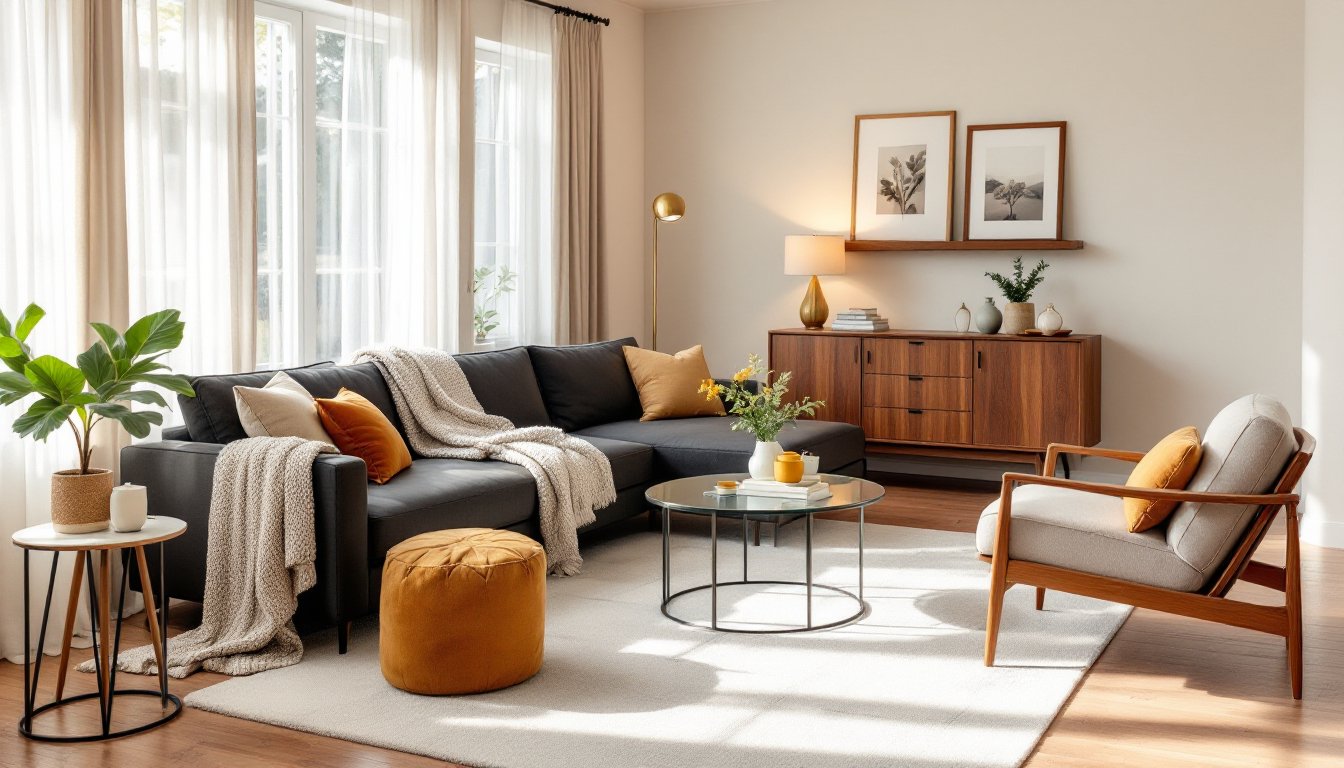
The 60-30-10 rule works well here: 60% of the room in a primary neutral, 30% in a secondary color, and 10% in accent tones. If a homeowner has a deep blue sectional, for instance, using it as the 60% anchor means keeping walls, large rugs, and most furnishings in warm whites or soft grays. The secondary color, say, warm wood tones, appears in side tables and bookcases. Then 10% of accent color (burnt orange or mustard) shows up in throw pillows, artwork, and accessories.
This framework prevents the room from feeling like a thrift store collection. Every piece, no matter its era or style, appears intentional because it respects the overall color story. A painted antique dresser in a softer shade of the accent color suddenly looks like a deliberate design choice rather than an odd addition.
Balance Different Furniture Styles and Eras
Mixing styles works best when there’s a clear relationship between pieces, even if they’re decades apart. The key is repetition, if a room contains modern geometric shapes, echo those shapes in accessories or a secondary furniture piece. If farmhouse wood tones dominate, bring them forward again through flooring, shelving, or trim details.
Modern Meets Mid-Century: A Timeless Combination
Mid-century modern and contemporary pieces are natural partners because both prioritize clean lines and functionality. A mid-century credenza with tapered wooden legs sits comfortably next to a sleek glass coffee table or a minimalist sofa. The shared design philosophy, form follows function, no unnecessary ornamentation, creates visual harmony even across decades.
To make this pairing work, keep upholstery colors cohesive. A gray contemporary sectional paired with a walnut mid-century cabinet both read as intentional when the wood tone and upholstery colors speak the same language. Add a geometric rug that pulls both styles forward, and the room feels like a deliberate curation rather than random assembly.
Blend Rustic and Contemporary Elements
Rustic and contemporary are trickier partners, they have opposing philosophies about texture and finish. But when done carefully, the contrast becomes the design strength. The trick is to use rustic pieces as statement items, not background elements. A rough-hewn wooden beam or reclaimed barn-wood shelving becomes architectural interest. Pair it with clean-lined contemporary furniture and the rustic element reads as intentional drama rather than mismatch.
Keep a consistent material story: if rustic elements are raw wood, bring that wood tone into other pieces, a wood-topped console, wooden picture frames, or a natural jute rug. Contemporary pieces in metal, glass, or smooth finishes then act as visual breaks, preventing the room from feeling too heavy or cabin-like. The interplay between rough and refined becomes the design statement.
Layer Textures and Materials for Visual Interest
A monochromatic color palette can flatten a room if all pieces are also uniform in texture. This is where layering materials prevents blandness. Start by identifying primary materials: upholstery fabric (linen, leather, or performance fabrics for durability), wood (stained, painted, or natural), and metal accents (brass, iron, or chrome).
When mixing styles, vary textures intentionally. If the main sofa is smooth leather (very modern), pair it with a textured wool throw and a nubby linen chair. A glass coffee table benefits from an area rug with a woven or high-pile texture. Wooden side tables in a matte finish work alongside glossy lacquered pieces or distressed finishes, the variety prevents monotony.
This principle also applies to wall treatments and flooring. If hardwood flooring is the base (smooth, reflective), a thick area rug adds warmth and texture. Wallpaper, shiplap, or paneled accents bring depth without overwhelming the room. Even simple choices like mixing matte and glossy paint finishes on trim creates subtle textural richness that makes a mixed-style room feel intentional rather than accidental.
Create Balance Through Scale and Proportion
One of the biggest mistakes when mixing furniture is ignoring proportion. A room full of delicate, spindly mid-century pieces with a massive contemporary sectional feels off-balance. The key is distributing visual weight evenly and ensuring pieces complement each other’s scale.
Large statement pieces, sectionals, armoires, or entertainment centers, need spatial breathing room. If a sectional takes up half the room, flanking it with smaller, proportional accent chairs and side tables prevents it from dominating. A low-profile media console works with a tall bookcase or wall shelving because the vertical and horizontal elements balance each other.
Scale also matters within groupings. A massive wooden coffee table paired with tiny nesting tables and a small side chair creates visual chaos. Instead, choose a coffee table proportional to the seating it serves, typically 2/3 the length of a sofa. Side tables should reach about the arm height of adjacent seating, creating a functional, proportional group.
Measuring matters here. A common guideline: a rug should extend at least 2 feet beyond the seating area on all sides. A sectional sofa in a small apartment might feel cramped if undersized: in a spacious loft, it becomes a proper anchor. Proportion is relative to room size, so assessing the room first prevents costly mistakes.
Anchor Your Space and Tie Everything Together
A well-mixed living room feels connected through thoughtful anchoring, visual elements that hold everything together. The largest, most prominent piece usually anchors the room: a sectional, an entertainment wall, or a fireplace if present.
Once the anchor is set, secondary pieces radiate from it. A rug anchors the seating area by unifying furniture groupings, preventing a scattered layout. Coffee tables, side tables, and accent chairs then relate back to that rug and the primary seating, creating invisible lines of connection even if styles vary.
Accessories, throw pillows, blankets, artwork, and lighting, are the final connectors. These should echo the color palette and repeat design elements from larger pieces. If a side table is mid-century with wooden legs, echoing that leg style in a lamp base or picture frame creates subtle visual threads. Throw pillows can pick up accent colors while mixing textures: pairing a smooth velvet pillow with a linen one and a knitted pouffe adds dimension without feeling disjointed.
Lighting deserves special mention. A single overhead fixture rarely works for mixed-style rooms: instead, layering light through table lamps, floor lamps, and wall sconces creates warmth and allows flexible use. Coordinating lamp bases, say, all brass, or all natural wood, creates unity even if shades vary in color or texture. This approach feels both intentional and comfortable, the hallmark of a well-mixed living room.
Getting Started With Confidence
Mixing and matching living room furniture succeeds when homeowners lead with color, respect proportion, and layer textures thoughtfully. Start by defining a clear color palette and anchor piece. From there, every addition becomes purposeful rather than random. There’s no need to match everything perfectly, in fact, the rooms that feel most inviting and personal are those where styles coexist intentionally. With these foundational principles in place, anyone can confidently build a living room that feels both cohesive and distinctly theirs.