Table of Contents
ToggleA large deck is a blank canvas, and that’s the problem. Too much open space invites clutter or, worse, looks sparse and uninviting. The key to a functional outdoor living area isn’t filling every square foot: it’s organizing your furniture into purposeful zones that encourage different activities and flow naturally from one space to the next. A thoughtfully planned layout transforms a sprawling deck into distinct entertainment, dining, and relaxation areas that feel cohesive and balanced. This guide walks through seven practical furniture layout strategies, complete with real-world considerations like traffic patterns, sight lines, and how to avoid the rookie mistake of pushing everything to the edges.
Key Takeaways
- Define distinct functional zones for lounging, dining, and relaxation rather than treating your large deck as one undifferentiated space, with at least 30–36 inches of clear walkway between zones for comfortable traffic flow.
- Reserve 20–30 percent of your deck as intentional open space to create visual balance and prevent the layout from feeling cramped like a furniture showroom.
- Choose durable, weather-resistant materials like teak, aluminum, or resin wicker frames, and select properly-scaled furniture pieces to match the size of your large deck and maintain visual harmony.
- Add shade elements such as pergolas, retractable awnings, or shade sails to transform your deck into a usable space throughout the day and encourage year-round outdoor living.
- Use vertical design features—tall planters, pendant lights, string lights, and wall-mounted elements—to draw the eye upward and create visual depth without consuming valuable floor space.
- Sketch your large deck furniture layout on paper or use a layout tool before purchasing to prevent overspending and avoid the frustration of rearranging heavy pieces after delivery.
Define Distinct Zones for Multiple Activities
The most common mistake homeowners make on large decks is treating the space as one undifferentiated area. Instead, imagine your deck divided into functional zones: a lounge section, a dining area, maybe a fire pit gathering spot, and a view zone for morning coffee.
Zoning isn’t about rigid boundaries, a gentle diagonal arrangement of furniture or a low planter does the trick. A furniture grouping of two lounge chairs, a side table, and an accent ottoman naturally signals “this is the quiet zone.” Similarly, a dining table with six chairs and a buffet console behind it creates an obvious eating area without needing a raised deck section.
When zoning, consider how people move between areas. Leave 30 to 36 inches of clear walkway between zones so guests don’t have to squeeze past furniture. If your deck is L-shaped or multi-level, use elevation changes to define zones naturally, the upper level becomes the lounge, the lower becomes dining.
Start by sketching zones on paper or using a deck layout tool before you buy anything. This prevents overspending and saves the frustration of rearranging heavy furniture after delivery.
Balance Open Space With Strategic Furniture Placement
Open space is crucial, it’s what makes a deck feel spacious rather than cramped, even a large one. The mistake isn’t having too much open space: it’s failing to leave intentional breathing room between furniture groupings.
A practical rule: aim for 20 to 30 percent of your deck to remain completely clear. If you have a 16 by 20-foot deck (320 square feet), reserve 64 to 96 square feet as unobstructed space. This isn’t wasted room, it’s the visual anchor that prevents the deck from feeling like a furniture showroom.
Place furniture in conversation clusters rather than a straight line. A U-shaped seating arrangement with chairs facing each other uses less linear footage and creates intimacy while maintaining sightlines across the deck. Angle furniture slightly toward a focal point, a view, a fire pit, or a water feature, rather than squaring everything off. A 45-degree angle breaks up the rigid geometry that makes large decks feel awkward.
Leave the sightlines from your door clear. If guests step out and immediately see a wall of loungers, the space feels closed-off. Orient at least one seating area to face the deck’s best view or toward the house, so the flow feels natural.
Create a Comfortable Lounge Area
A lounge zone is the heart of most decks. It’s where people actually spend time, reading, talking, or just enjoying the view. Comfort matters here, so choose durable, weather-resistant pieces in breathable fabrics.
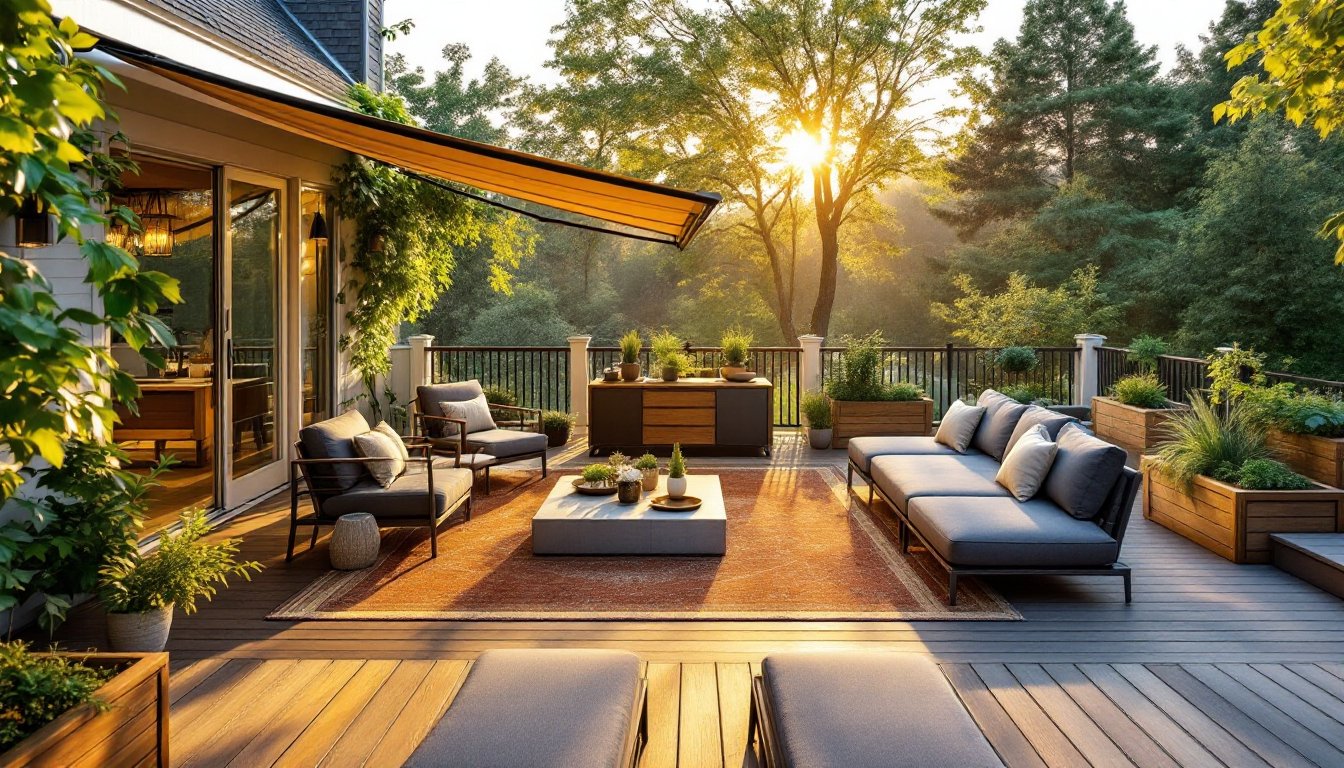
For a large lounge corner, plan on a sectional sofa (or a combination of modular seating pieces), one accent chair, two side tables, and an ottoman or coffee table. This setup occupies roughly 200 to 300 square feet but doesn’t feel cramped because seating faces inward. Pair it with 2-3 cushioned loungers positioned to catch morning or afternoon sun.
Be practical about textiles. Sunbrella or similar solution-dyed acrylic fabrics resist fading and mildew far better than untreated cotton or polyester. If you live in a humid climate, airflow around cushions prevents rot, a slatted or mesh lounge chair lets water drain instead of pooling. Store cushions in a weatherproof box or bring them inside during off-season.
Scale matters. Oversized lounge chairs (36 inches wide or more) dominate large decks: pair them with equally substantial side tables so proportions feel balanced. A spindly bistro table next to a massive lounger looks out of place. Stick with solid wood, aluminum, or resin wicker frames, they age gracefully and handle seasonal swings without warping.
Incorporate a Dining Section
Dining on the deck transforms it into an extension of your kitchen and entertaining space. A good deck dining setup doesn’t need to be fancy, it needs solid footing, enough clearance, and a table scaled to the space.
For large decks, a rectangular or oval table seating 6 to 8 people works well: pair it with chairs that tuck underneath to save space when not in use. A 36 by 72-inch table with six chairs needs roughly 120 square feet (including clearance). Ensure at least 36 inches of clearance on each side so diners and servers can move freely.
Consider a secondary dining surface nearby, a sideboard, bar cart, or console table, to hold drinks, appetizers, and condiments, keeping the main table clear. This small addition dramatically improves flow during gatherings.
Material durability counts. Teak or ipe hardwood tables resist rot and splinters: they age to a silvery patina unless sealed. Aluminum frames with glass tops are lighter and lower-maintenance. Composite materials (recycled plastic and wood fiber) mimic wood without the yearly sealing, though they’re pricier upfront. Skip untreated softwood, it splinters and rots within a few seasons in outdoor conditions.
Add Shade and Weather Protection Elements
A large open deck under full sun becomes unbearable by noon in most climates. Strategic shade transforms it into a usable space from dawn to dusk.
A shade sail, retractable awning, or pergola positioned over the lounge or dining area is essential. Shade sails (8 by 10 feet or larger) are affordable and flexible: mount them to the deck railing and house wall with stainless steel hardware. A motorized retractable awning gives you the option to extend or retract based on sun angle and season. Pergolas or shade structures take longer to install but add permanent elegance, they’re also ideal if you plan to add a privacy screen later.
Position shade to account for sun path. In northern climates, afternoon shade is most critical: in the South, morning and late-afternoon shade matter more. An east-facing lounge needs afternoon coverage: a west-facing deck needs morning shade.
Don’t overlook privacy screening or a decorative wind break. A tall planter with bamboo or ornamental grasses, lattice panels, or fabric screens soften exposure while allowing airflow. This also protects furniture from weather and prying eyes, making the space feel more intimate and encouraging people to linger.
Use Vertical Design and Layering Techniques
Large decks benefit from vertical elements that draw the eye upward and create visual complexity without eating floor space. This prevents the “empty field” feeling that makes sprawling decks feel sparse.
Add tall planters (24 to 36 inches) at zone boundaries or corners. Raised planter beds or tiered containers define areas and can screen sightlines. Hang outdoor pendant lights or string lights above the dining table and lounge area, they create ambiance and make the space feel intentional. Wall-mounted shelving or a pegboard (if you have a deck railing) allows small plants, lanterns, or displays without taking up floor space.
Layer textures and heights. A mix of low lounge chairs, mid-height dining chairs, and tall standing elements (umbrellas, light fixtures, tall planters) creates visual interest and prevents monotony. If your deck has a railing, it’s already vertical architecture, use it. Attach planter boxes to the rail or hang decorative hooks for hanging baskets.
Standardized deck railings (42 inches high for codes) already frame your space, but reinforce them with climbing vines or screens to create depth. An outdoor rug (8 by 10 feet or larger) anchors each furniture zone and softens the hard surface, look for fade-resistant synthetic fibers designed for wet areas to handle moisture and foot traffic.
Conclusion
Laying out a large deck comes down to three principles: define zones, preserve open space, and layer vertically to create depth. Start by sketching a layout on paper or a simple app before buying furniture. Choose durable, properly-scaled pieces, leave at least 30 to 36 inches of clearance between zones, and add shade so people actually use the deck year-round. Done right, your deck becomes an outdoor room that flows naturally and welcomes both quiet afternoons and entertaining crowds.