
Table of Contents
ToggleFurnishing a living room on a budget doesn’t mean settling for flimsy particleboard or cramped seating. Clearance living room furniture offers savvy shoppers a genuine path to quality pieces at 30–70% off retail prices. Whether someone’s outfitting a new space, refreshing a tired room, or simply hunting for solid value, the clearance market in 2026 is stocked with legitimate deals from reputable retailers. The trick isn’t just finding low prices, it’s knowing where to look, what to inspect, and when to pull the trigger before the best pieces vanish. This guide walks through the strategies and sources that separate smart shoppers from those stuck with regrets.
Key Takeaways
- Clearance living room furniture from reputable retailers offers genuine savings of 30–70% without sacrificing quality, making it ideal for budget-conscious shoppers seeking durable pieces.
- Department stores, specialty retailers, and outlet centers are the best sources for quality clearance pieces, with online filters and return windows protecting against defects.
- Inspect frame construction, joinery, upholstery quality, and cushioning before buying; solid hardwood frames with mortise-and-tenon joints and dense fabrics indicate longevity.
- Shop during peak clearance seasons (January, August, September) and subscribe to retailer alerts to access deals 24–48 hours before general announcements.
- Verify original retail prices, measure your space carefully, and consider in-person inspections to confirm condition and ensure pieces fit through doorways and entryways.
Why Shop Clearance Living Room Furniture
Clearance furniture exists for predictable reasons: seasonal transitions, floor model overstock, slight finish variations, or discontinued lines. For buyers, this translates to genuine savings on couches, chairs, tables, and accent pieces without sacrificing structural integrity or design appeal.
Quality matters more than price. A solid-wood coffee table marked down 50% is still solid wood, not a bargain-bin knock-off. Department stores and major furniture chains refresh inventory regularly, meaning their clearance sections often contain last season’s mainstream styles from proven manufacturers, not budget-line junk. Pieces that didn’t sell at full price sometimes have minor cosmetic imperfections (a slight color variation in upholstery, a small dent in the frame, or discontinued color codes), but the bones remain sound.
Another advantage: clearance shopping forces intentional decisions. Browsing a clearance rack means picking pieces for durability and fit rather than impulse-buying because of a sale tag. Shoppers typically spend less time chasing trends and more time choosing timeless pieces that’ll hold up for years. A neutral-tone sectional or solid wood side table marked down 40% often outlasts trendy fast-furniture picks bought at full price elsewhere.
Where to Find Quality Clearance Pieces
The best clearance living room furniture comes from specific retail channels known for quality inventory and reliable pricing.
Department Store Clearance Sections
Retailers like Macy’s, JCPenney, and Costco maintain dedicated clearance zones, both in-store and online. Department stores curate their furniture selections from mid-tier to upper-mid-tier suppliers, so even marked-down pieces carry reasonable construction standards. Clearance sections rotate frequently, especially after holidays and seasonal transitions.
Online clearance pages are particularly valuable because they list quantities and condition notes upfront. A shopper can filter by price, style, and material type, then read customer reviews before committing. Many department stores offer free shipping on clearance items above a minimum purchase threshold, and return windows are often standard (30–60 days), providing protection against unseen defects. Always check the fine print: some clearance items are final-sale, so inspect photos and descriptions carefully.
Specialty Furniture Retailers and Outlet Stores
Chains like Ashley Furniture, Wayfair, Article, and regional outlet centers stock dedicated clearance inventory. Specialty retailers often have deeper discounts because they move volume through a single category. Wayfair’s clearance section, for instance, receives constant updates and includes returns and floor models from their broader catalog.
Outlet stores, whether furniture-specific chains or traditional outlet malls, offer a different advantage: manufacturers clear excess stock directly. Outlet furniture isn’t “lower quality”: it’s simply overstock or previous-season inventory from the same production lines as full-price showroom pieces. A solid-wood dining table at an outlet store might be identical to one in a department store, minus $400 because it didn’t sell in the initial window.
Local classified sites and marketplace apps (Facebook Marketplace, Craigslist) occasionally yield excellent deals on gently used pieces from individuals downsizing or moving. These purchases require in-person inspection and negotiation, but a shopper who finds a solid vintage sofa or mid-century chair secondhand often saves 60–80% compared to new clearance pricing.
Tips for Selecting Durable Clearance Furniture
Clearance prices are attractive, but durability depends on careful evaluation. Here’s what to check:
Frame construction: Run a hand under the piece. Solid hardwood frames (oak, maple, or kiln-dried pine) feel sturdy and resist warping. Engineered wood or particle board frames are lighter and cheaper, they work for guest chairs or light-use pieces, but won’t survive years of daily sitting or frequent repositioning. Ask the retailer about frame material: reputable stores list this in product specs.
Joinery: Look where the arms meet the body or where legs attach. Mortise-and-tenon joints (traditional woodworking) and doweled connections are gold standards. Corner blocks, reinforcing pieces glued and screwed into internal joints, indicate a manufacturer invested in longevity. Pieces held together with staples and glue alone are less reliable long-term.
Upholstery quality: Feel the fabric or leather. Is it dense and tightly woven, or thin and loose? Check the seams for uneven stitching or loose threads, which signal rushed manufacturing. For fabric couches, ask if the cover is removable and washable, this detail dramatically extends lifespan if spills happen. Genuine leather ages well: microfiber and blended synthetics vary widely in durability.
Legs and feet: Wobble the furniture. Loose legs or feet mean joints are failing, and tightening will only buy time. Solid wood or metal legs are preferable to plastic feet, which snap easily.
Cushions and springs: Sit on the piece firmly. Cushions should have some give but not feel flat or overstuffed to the point of restriction. Coil springs in the base (you’ll hear a slight noise when pushing down) are more durable than sinuous springs or foam-only construction. High-density foam lasts longer than low-density.
Documentation: Ask for warranty details, care instructions, and proof of the original retail price. Knowing what the piece normally costs helps confirm the discount is genuine. A couch marked down from $2,500 to $900 represents real savings: a couch advertised as “clearance” but originally $899 may not be an actual deal.
How to Score the Best Deals
Timing and strategy matter as much as location.
Shop seasonal transitions: January, August, and September are peak clearance seasons. Retailers refresh inventory in preparation for spring/summer and fall/winter merchandise, and older pieces move fast. Post-holiday sales (late January) also clear holiday-themed or special-order items at steep discounts.
Sign up for alerts: Department stores and furniture retailers email subscriber lists about clearance sales before general announcements. A shopper who subscribes to Macy’s, Costco, or Wayfair emails gets 24–48 hour heads-up on major markdowns, critical, since popular items sell within hours.
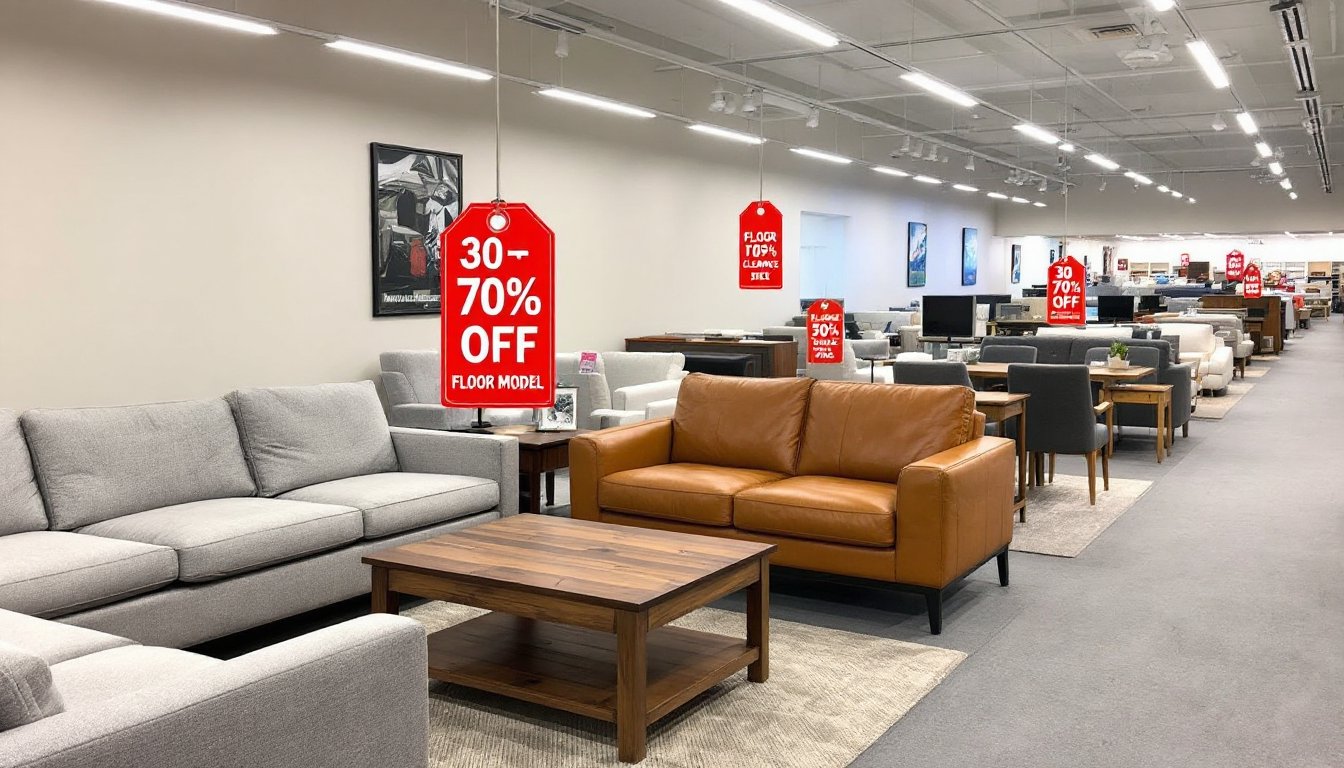
Check display models and returns: Floor models are new but show minor cosmetic wear (scuffs, light stains, fading where fabric was exposed to showroom lights). Retailers often discount these 20–40% below the original price. Returned items, if undamaged and returned within the window, are also clearanced, sometimes with tags still attached.
Negotiate on bundles: Buying a matching sofa and chair combo, or pairing a coffee table with side tables, often unlocks additional percentage discounts. Ask the sales associate if bundling saves money: some stores apply an extra 10–15% off.
Visit in person when possible: Online clearance sections can’t always show condition. Seeing the fabric grain, checking for stains or dents, and testing the seat height ensures no regrets on arrival. If shipping is a cost factor, buying in-store eliminates it.
Know your room dimensions: Measure entryways, hallways, and doorways before shopping. A seemingly incredible deal on a sectional means nothing if it won’t fit through the front door. Bring a photo of the room’s layout and note the exact dimensions of the space where the furniture will sit.
Conclusion
Clearance living room furniture delivers real value when shoppers approach it strategically. The best pieces come from reputable retailers offering transparent condition details and return policies. By checking frame and joint construction, inspecting upholstery, and timing purchases around seasonal sales, anyone can build a functional, stylish living room without paying full retail. Smart clearance shopping isn’t about buying everything on sale, it’s about choosing durable, well-made pieces that happen to be discounted.