
Table of Contents
ToggleDark bedroom furniture has moved from a niche aesthetic choice into a mainstream design strategy for homeowners seeking a sophisticated, restful retreat. Whether it’s espresso-stained wood, charcoal-black metal frames, or deep walnut tones, dark furniture creates visual weight and intentional mood in a bedroom. The shift toward dark interiors reflects a broader design trend that prioritizes sleep quality, coziness, and timeless appeal over bright, stimulating spaces. Unlike painted accent walls or trendy décor, dark furniture is a structural investment that anchors the room and withstands style cycles. This guide walks through selecting, arranging, and styling dark bedroom furniture to achieve a sanctuary that feels both luxurious and genuinely restful.
Key Takeaways
- Dark bedroom furniture creates psychological calm and reduces visual clutter, making it ideal for restful, luxury-inspired sanctuaries that prioritize sleep quality.
- Essential dark furniture pieces—platform beds, nightstands, dressers, and storage solutions—serve as structural investments that anchor your room and resist style cycles better than trendy alternatives.
- Pair dark furniture with lighter wall tones (soft gray, cream, warm white) and warm-white LED lighting (2700K) to prevent a dungeon effect while maintaining the intended intimate atmosphere.
- Dark bedroom furniture hides dust, pet hair, and fingerprints far better than light finishes, reducing visible wear and maintenance demands on high-touch surfaces.
- Position your bed as the focal point with flanking nightstands, place the dresser opposite to create visual balance, and use a dark rug to ground furniture and add warmth to hard flooring.
- Maintain dark furniture with weekly microfiber dusting and monthly conditioning, while keeping accessories minimal (three to four pieces max) to preserve the intentional, breathing-room aesthetic.
Why Dark Furniture Works In Modern Bedrooms
Dark furniture creates psychological calm and visual grounding that lighter pieces simply don’t deliver. Bedrooms are where people unwind, and darker tones signal relaxation to the brain, there’s a reason luxury hotels and sleep clinics favor muted, saturated hues over pastels. From a design standpoint, dark pieces absorb light rather than reflect it, reducing visual clutter and creating a more intimate atmosphere. This makes the room feel more cohesive and intentional.
A secondary benefit: dark furniture masks dust, pet hair, and minor wear far better than light finishes. A charcoal nightstand won’t show fingerprints the way a white one will. Structurally, dark stains and finishes also tend to be more forgiving of imperfect joinery or grain variation in solid wood, another reason they’re popular in mid-range furniture.
From an ROI perspective, dark bedroom furniture doesn’t date itself as quickly as trendy light woods or painted pieces. A solid dark wood bed frame or dresser maintains relevance across decades, making it a practical investment rather than a fashion gamble.
Essential Dark Furniture Pieces To Transform Your Space
Platform Beds And Headboards
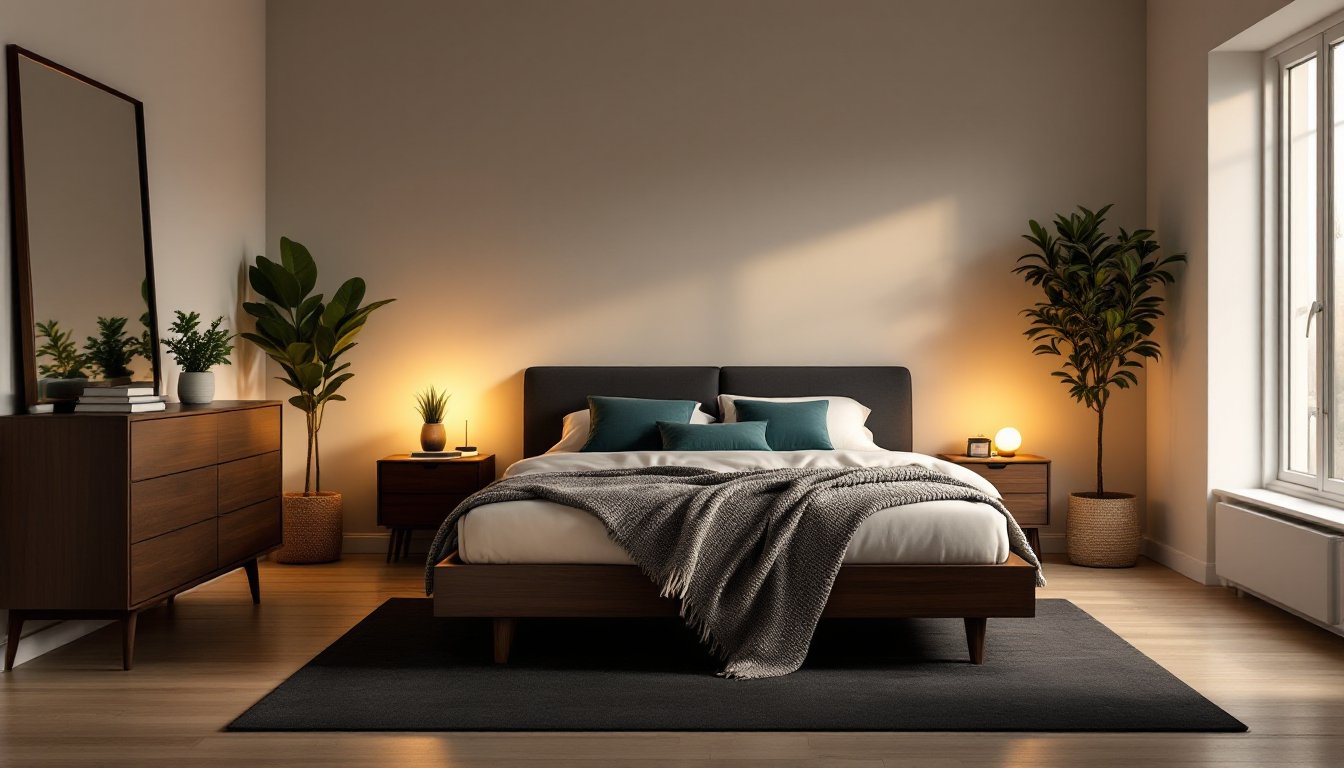
The bed is the focal point. A dark platform bed (typically walnut, ebony, or charcoal-painted hardwood) anchors the room immediately. Platform beds are practical for DIYers: they require no box spring, sit lower to the floor (making the room feel more spacious), and pair naturally with minimal nightstands. A solid wood platform bed with a low-profile or upholstered headboard in dark fabric or leather adds texture without visual fussiness.
When selecting a platform bed, check the slat spacing (typically 2–3 inches apart to prevent mattress sagging) and verify weight capacity. If building a bed frame from scratch, use 2-by-8 or 2-by-10 pressure-treated lumber for the perimeter and 1-by-4 slats spaced appropriately. A dark stain (espresso or ebony) applied after assembly ties the whole structure together. Most homeowners can assemble or build a platform bed in a weekend with basic tools.
Nightstands, Dressers, And Storage Solutions
Nightstands in matching dark wood or metal frames provide functional symmetry and a place for lamps, books, and a water glass. Opt for nightstands with one or two drawers to minimize surface clutter. A dark dresser (typically 5–7 feet wide) serves dual purpose: storage and a visual anchor along one wall. Pair it with a matching or complementary mirror to reflect light and enlarge the perceived space.
For storage, consider a dark wood credenza or low cabinet at the foot of the bed for blanket storage and visual balance. Built-in closets with dark-stained shelving or a simple dark shelving unit keeps seasonal bedding organized without consuming floor space. If you’re installing floating shelves, 1-inch thick solid wood or plywood shelves stained dark hold 25–50 pounds per shelf (depending on bracket quality and stud spacing), perfect for books, plants, or decorative objects.
Designing Your Dark Furniture Bedroom Layout
Start with the bed placement: position it where the headboard is the first thing you see when entering. This creates psychological weight and intentionality. Nightstands flanking the bed (one on each side) provide symmetry and functional balance. Leave 18–24 inches of clearance on each side for walking and making the bed without strain.
Place the dresser opposite the bed or on an adjacent wall, creating a visual triangle that balances the room. A dark rug (charcoal, navy, or black) anchored under the bed and extending 2–3 feet on each side grounds the furniture and adds warmth to hard flooring. Keep the layout open: cramped dark rooms feel claustrophobic, while sparse dark rooms feel intentional and calm.
Measure your room’s dimensions before purchasing furniture. A queen bed (60″ × 80″) is standard: king beds (76″ × 80″) consume significant floor space. In smaller bedrooms, a queen platform bed with a slim dresser and floating nightstands maximizes usability. Don’t overthink it, most bedroom layouts follow the same pattern, and dark furniture actually simplifies choices by creating natural visual hierarchy.
Lighting And Color Combinations That Elevate Dark Interiors
Dark furniture needs deliberate lighting to avoid a dungeon effect. Install bedside table lamps with warm-white LED bulbs (2700K color temperature) flanking the bed, aim for 40–60 watts equivalent per lamp for reading without strain. Add a ceiling fixture with dimmer control so you can adjust mood from energetic (for dressing) to relaxing (for bedtime).
Color pairing matters. Charcoal or black furniture pairs beautifully with soft gray, cream, warm white, or muted sage walls. These lighter wall tones prevent the room from feeling too heavy while dark furniture adds visual anchor. Avoid stark white, which creates harsh contrast and can feel cold. If walls are darker (deep blue, charcoal), keep them at least one shade lighter than the furniture.
Add accent colors through soft furnishings: warm linen or cotton bedding in ivory, oatmeal, or soft taupe creates visual relief against dark wood. A few throw pillows in muted jewel tones (deep teal, rust, or charcoal) echo the furniture without clashing. Keep accessories minimal, three to four accent pieces, max. Layered lighting (overhead, task, and ambient) prevents dark furniture from absorbing all available light.
Practical Tips For Maintaining And Styling Dark Bedroom Furniture
Dark wood and metal furniture require regular maintenance. Dust weekly with a microfiber cloth (dry), then monthly with a wood conditioner or polish appropriate to the finish. For solid wood pieces, use oil-based cleaners on natural wood and water-based or silicone-free products on stained finishes to avoid buildup. Metal frames benefit from the occasional wipe-down with a slightly damp cloth, avoid abrasive cleaners that scratch the finish.
For upholstered headboards or fabric accent pieces, vacuum monthly and spot-clean spills immediately with a cloth and mild soap solution. Leather needs a different approach: clean with leather-specific wipes, condition twice yearly with quality leather balm, and avoid direct sunlight (which fades leather over time).
Styling requires restraint. Dark furniture already dominates visually, so resist adding clutter. Keep nightstands clear except for a lamp, a small plant, and personal essentials. Hang artwork sparingly, one or two framed pieces above a dresser or on the wall opposite the bed. A single large plant in a corner or corner shelf adds life without chaos. Dark interiors benefit from breathing room and intentionality rather than accessory abundance.
Rotate seasonal bedding to refresh the look without major expense. Heavier linen or flannel in winter shifts to lighter cotton in summer, both complement dark furniture and cost far less than replacing larger pieces.