
Table of Contents
ToggleWhen someone walks into a bedroom furnished with quality wood pieces, they feel the difference immediately. Solid wood bedroom furniture brings warmth, durability, and character that veneer or particle board simply can’t replicate. Unlike trendy fast-furniture alternatives that deteriorate within a few years, wood bedroom furniture improves with age, developing a patina that tells the story of a well-lived home. Whether shopping for a new bed frame, nightstand, or dresser, understanding wood types, construction quality, and finishing options ensures a bedroom that’s both functional and enduring. This guide walks through selecting, maintaining, and styling solid wood bedroom furniture that will serve for decades.
Key Takeaways
- Solid wood bedroom furniture offers superior durability, timeless aesthetics, and improved value retention compared to particle board or fast-furniture alternatives.
- Hardwoods like oak, maple, cherry, and walnut are ideal for visible surfaces and high-traffic pieces, while softwoods work best for hidden structural components to balance quality and budget.
- Quality bed frames should feature mortise-and-tenon joinery at corners and center support for queen or king sizes to prevent sagging and ensure decades of reliable performance.
- Maintain wood bedroom furniture by controlling humidity between 30–50%, avoiding direct sunlight, dusting regularly with soft cloths, and using appropriate finishing products for your specific wood treatment.
- Choose finishes and stains that complement your décor style—natural finishes highlight grain for contemporary looks, while medium to dark stains add warmth and coziness to bedroom spaces.
Why Wood Furniture Dominates Modern Bedrooms
Wood remains the material of choice for bedroom furniture because it balances aesthetics, strength, and workability. A solid wood bed frame distributes weight evenly across its joinery and rails, supporting sleepers reliably night after night, something particleboard or MDF alternatives struggle to do over time. Unlike metal frames that can creak or vibrate, wood absorbs sound and movement naturally, contributing to a quieter, more restful environment.
Beyond performance, homeowners appreciate wood’s versatility. The same oak dresser transitions seamlessly from modern to traditional décor by simply changing hardware or paint color. Wood also holds its value better than synthetic alternatives: a well-maintained cherry or walnut bedroom set often appreciates or holds its initial cost, while cheaper composites depreciate rapidly. Emotionally, wood carries a psychological weight, it feels substantial, honest, and connected to nature in ways plastic or laminate never will. That’s why wood bedroom furniture remains the top choice for quality-conscious DIYers and homeowners planning long-term investments.
Top Wood Types for Durable Bedroom Pieces
Hardwoods vs. Softwoods: What’s Best for Your Bedroom
When shopping for or building bedroom furniture, the wood species matters significantly. Hardwoods, oak, maple, cherry, walnut, and ash, come from deciduous trees and are denser, harder, and more resistant to dents and wear. They’re the premium choice for visible surfaces, edges, and high-traffic pieces like bed frames and nightstands. Oak is widely available and affordable, featuring prominent grain that many prefer for rustic or farmhouse styles. Maple offers fine, consistent grain and pale color, suiting contemporary designs. Cherry darkens beautifully over decades, developing rich warmth that appeals to traditional aesthetics. Walnut delivers the deepest, most luxurious appearance, and commands the highest price.
Softwoods, pine, fir, and spruce, cost less and are easier to work with, making them popular for DIY builders. They’re lighter in weight and actually softer (meaning they dent more easily), so they work better for structural components like bed frame rails or drawer boxes rather than visible surfaces. Pine, for instance, has a rustic charm but requires protective finishes and careful handling to avoid surface damage.
For bedroom furniture, a hybrid approach makes sense: hardwood for the frame’s main structure and visible elements, softwood for hidden components like drawer interiors or dust panels. This balances durability with budget. Whichever you choose, confirm the wood is kiln-dried to a moisture content between 6–12% to prevent warping or cracking after finishing.
Essential Wooden Bedroom Furniture Pieces
A functional, attractive wood bedroom starts with foundational pieces that anchor the space and serve daily needs.
Bed Frame: The centerpiece, a solid wood bed frame carries weight (yours and the mattress). Look for mortise-and-tenon joinery at corners rather than just metal brackets, this time-tested joint transfers loads safely and lasts generations. Queen and king frames need center support (a middle rail or legs) to prevent sag over time. Hardwood like oak or maple works well: avoid softwood frames for larger mattresses unless they have substantial cross-bracing.
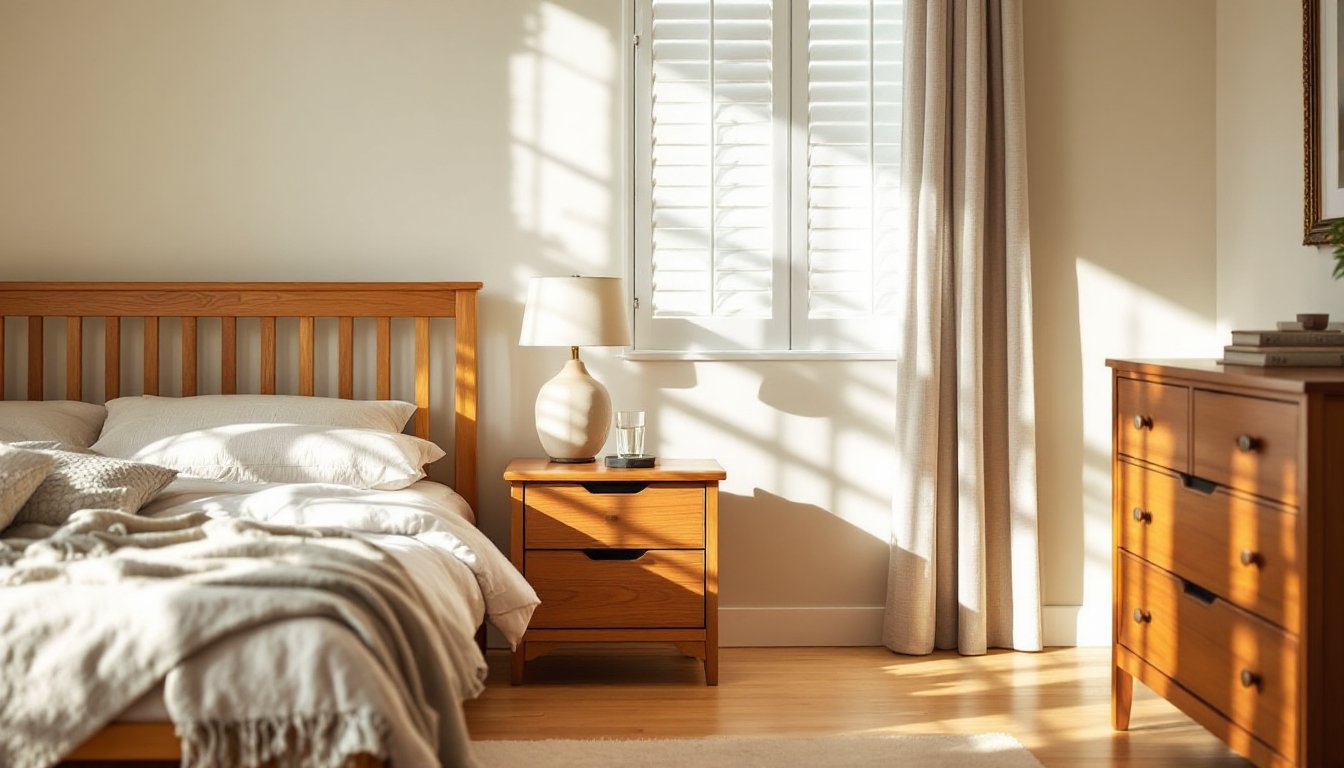
Nightstands: Compact and practical, nightstands benefit from hardwood construction, especially if they’ll hold a lamp, phone, and books. A simple two-drawer or one-drawer design in matching wood creates visual continuity and provides storage without cluttering the space. Ensure drawers have wooden slides or quality metal drawer glides to handle daily opening and closing.
Dresser: A well-built dresser combines storage with visual impact. Full-extension drawer slides (which allow drawers to open fully for easy access) are worth the investment. Hardwood fronts paired with softwood sides and backs reduce costs while maintaining appearance and durability where it counts.
Headboard: Optional but impactful, a wooden headboard, simple and slatted or elaborate with panels, frames the bed and provides a focal point. It’s also a forgiving project for DIYers, as mistakes in joinery or finish are less visible than on drawers or rails.
Start with these core pieces. Accent tables, benches, or shelving can follow as budget and space allow.
Caring for Your Wood Bedroom Furniture
Quality wood bedroom furniture pays dividends only if properly maintained. The enemy of wood is moisture and direct sunlight, keep bedroom humidity between 30–50% using a dehumidifier if your climate is damp, and use curtains to filter harsh UV rays that fade finishes and bleach wood color.
Daily care is straightforward: dust with a soft, dry cloth. Once every 1–2 months, lightly wipe surfaces with a damp cloth (wrung out, not dripping), then dry immediately. For scuffs or minor damage, wood conditioner or paste wax buffs out light marks without stripping the finish. For water rings or stubborn stains, 000 steel wool and a dab of mineral oil work on some finishes, though test on an inconspicuous area first.
Avoid commercial furniture polishes heavy in silicone, they build up and eventually gunk up the finish. Instead, use products labeled safe for your specific finish type (lacquer, oil, wax, or polyurethane). Every 5–10 years, depending on wear, a professional refinish may restore a dulled surface, though this requires stripping and sanding, making it a job for professionals or experienced DIYers.
Minor dents in softwood can sometimes be raised by carefully applying a damp cloth and heat (a clothes iron on low, held above the wood for a few seconds), which swells the compressed fibers. Hardwood dents are permanent and best left alone unless severe, they’re part of the character. Prevent damage upfront: use coasters, felt pads under lamps or décor, and avoid placing hot items directly on wood surfaces.
Selecting the Right Wood Finish and Style
The finish, stain color, sheen level, and protective coat, transforms the same wood species into dramatically different looks. Natural or light finishes (clear matte or satin lacquer, wax, or natural oil) highlight wood grain and warmth, suiting Scandinavian, rustic, or contemporary aesthetics. Medium to dark stains (honey, walnut, espresso) add richness and can make smaller bedrooms feel cozier. Avoid over-darkening unless you’re going for dramatic contrast: heavily darkened wood can absorb less light and make spaces feel smaller.
Sheen matters too. Matte or flat finishes give a sophisticated, hand-rubbed feel and hide dust and fingerprints well, but they’re less durable and harder to clean. Satin finishes offer a gentle luster, the most practical choice for bedroom furniture, balancing beauty with easy maintenance. Gloss finishes are glossy, modern, and extremely durable, though they show every fingerprint and dust particle.
For protection, polyurethane (water-based or oil-based) is the industry standard, it’s durable, affordable, and comes in various sheens. Lacquer dries quickly and provides a smooth finish but is less forgiving to apply. Wax finishes are traditional and feel warm but require more frequent reapplication. Hard-wax oil blends ease of application with durability, popular in contemporary and Scandinavian designs.
When choosing style, ensure your wood bedroom furniture complements existing décor. Mixing wood tones (e.g., walnut dresser with oak nightstands) works if finishes are similar and the space has a cohesive color palette. Consistency in joinery style and hardware, minimalist or traditional, also ties pieces together visually.
Conclusion
Solid wood bedroom furniture is an investment in durability, aesthetics, and peace of mind. By selecting the right wood species, understanding construction quality, and maintaining pieces properly, a homeowner creates a sleep sanctuary that strengthens with age. Whether building custom pieces or shopping for heirloom-quality sets, the principles remain: prioritize hardwoods for visible surfaces, ensure solid joinery over shortcuts, and choose finishes that suit both style and lifestyle. A well-furnished wood bedroom is both timeless and distinctly personal, exactly the foundation a restful, beautiful home needs.