Table of Contents
ToggleWhen someone sinks into a standard patio chair and immediately feels their knees jut up toward their chest, they’re experiencing the discomfort that extra deep patio furniture solves. These deeper-seated pieces, typically 6 to 8 inches deeper than conventional outdoor seating, offer a lounging experience closer to what indoor furniture delivers. For anyone who spends serious time on the patio, from morning coffee to evening gatherings, extra deep seating changes how a backyard feels. This guide breaks down what makes these pieces worth the investment, which materials stand up to weather, and how to keep them looking great year after year.
Key Takeaways
- Extra deep patio furniture offers seat depths of 30 to 36 inches compared to standard 24 to 26 inches, providing superior comfort for extended outdoor lounging and natural reclining positions.
- The deeper seating design requires lower seat heights (16–18 inches) and reclined backrests, creating an engineering adjustment that transforms how patios are used and encourages longer gatherings.
- Popular extra deep patio furniture styles include sectionals, lounge chairs, oversized club chairs, and conversation sets, all customizable to fit different patio sizes and layouts.
- Powder-coated aluminum and synthetic wicker offer the best durability for extra deep seating in humid or coastal climates, while teak provides a premium aesthetic but requires annual maintenance.
- Proper care including seasonal cushion storage, monthly vacuuming, and fitted furniture covers significantly extends the lifespan of extra deep pieces and protects against UV fade and weather damage.
What Makes Extra Deep Patio Furniture Different
Extra deep patio furniture distinguishes itself through seat depth. Standard outdoor chairs sit around 24 to 26 inches from front to back, while extra deep versions push that to 30 to 36 inches. This extra dimension affects everything: the overall footprint, how far you can recline, and whether your legs can stretch out comfortably.
The depth works in tandem with seat height and back angle. A deeper seat typically has a lower seat height (around 16 to 18 inches versus 18 to 20 inches for standard pieces) and a more reclined backrest. Manufacturers achieve this by extending the frame rails and internal support structure. This isn’t just slapping a thicker cushion on an ordinary chair, it’s a whole engineering adjustment.
You’ll find extra deep seating in several forms: lounge chairs, sectional components, oversized club chairs, and conversation sets. Each style maintains that signature depth while adapting to different layouts and uses. The trade-off is practical: deeper furniture takes up more space, so it works best in spacious patios or carefully planned smaller areas.
Benefits of Choosing Extra Deep Seating Options
Superior Comfort and Support
The primary benefit of extra deep patio furniture is comfort that actually justifies sitting outside for hours. A deeper seat lets someone recline naturally without perching on the edge. Feet rest flat on the ground, knees stay at a healthy angle, and lower back gets proper support. For people over six feet tall, couples who like to sit together, or anyone with back concerns, this comfort factor is non-negotiable.
Extra deep seating also accommodates movement. You can shift positions, tuck your legs up, or lie down for an afternoon nap without feeling cramped. This flexibility keeps users happy across different body types and sitting preferences, no one’s stuck in one rigid posture for hours.
Enhanced Lounging Experience
There’s a psychological shift when furniture invites you to truly relax. Deep seating signals permission to settle in, which changes how people use the patio. Instead of quick perches between tasks, the backyard becomes a destination, a place to read, chat, or watch the sunset properly. This behavioral shift pays dividends in how often your outdoor space actually gets used.
Deep sectionals and lounge pieces also support group gatherings better. Multiple people can sit closely without touching uncomfortably, and the reclined posture creates a more intimate conversation dynamic. It’s the difference between sitting at attention in standard patio chairs and actually lounging together.
Popular Extra Deep Patio Furniture Styles
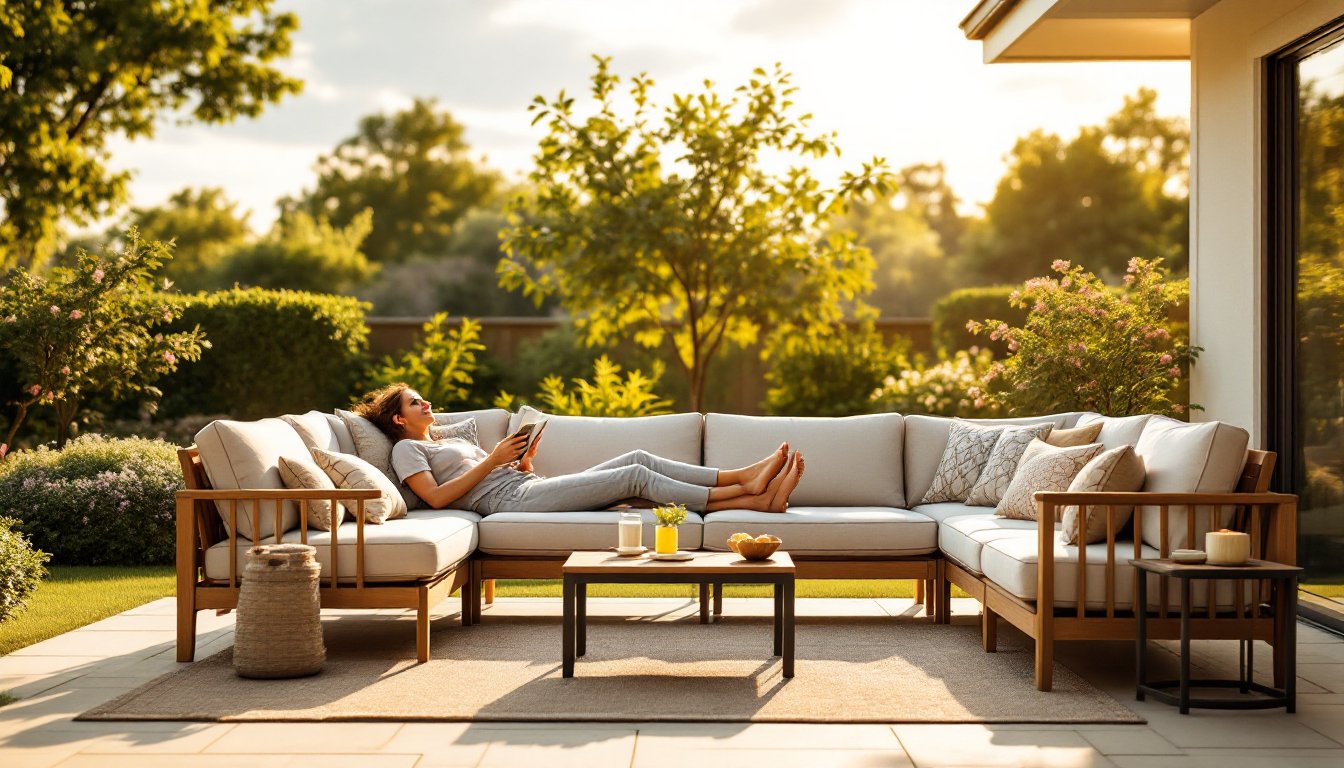
Extra deep sectionals dominate the market because they offer maximum seating in a footprint that leverages that depth well. An L-shaped or U-shaped sectional with 32-inch-deep seats transforms a patio into a living room. Corner pieces, chaises, and standard sections mix and match, letting homeowners customize their layout.
Deep lounge chairs work as standalone pieces or anchors for a seating arrangement. Some feature adjustable backs or built-in footrests, turning them into pseudo-daybeds. These pieces pair well with small side tables and outdoor rugs to create a personal retreat zone.
Oversized club chairs with extra depth provide an alternative to recliners. They’re smaller than sectionals but noticeably roomier than standard patio chairs, making them ideal for smaller patios or as focal points in larger ones.
Conversation sets with deep seats maintain the traditional arrangement, chairs and sofa facing each other, but with that added lounging depth. This style suits homeowners who want sociability without the footprint of a full sectional.
All these styles work in modern, transitional, coastal, and traditional aesthetics. The key is choosing materials and cushions that match your existing landscape design.
Material Considerations for Durability
The frame is where durability lives. Powder-coated aluminum resists rust and requires minimal maintenance, ideal for humid climates or coastal areas where salt spray is a concern. Aluminum’s lightweight nature makes rearranging easier, though it’s less heavy-duty than other options.
Teak and other hardwoods age beautifully and last decades if maintained. Teak naturally sheds oils that resist rot and insects, but it requires annual sealing to prevent graying. Hardwood frames are heavier and more expensive but deliver a premium aesthetic.
Wrought iron provides classic style and durability but demands rust prevention upkeep and regular repainting. It’s best for protected covered patios rather than open-air exposure.
For cushions and fabrics, solution-dyed acrylic and polyester blends outperform natural fibers outdoors. Look for fade resistance and mildew-resistant treatments, check product labels for UV protection ratings. Cushion covers should be removable and machine-washable: higher-end options include Sunbrella or equivalent performance textiles.
Rattan or woven materials (synthetic wicker) mimic natural aesthetics while resisting weather. Ensure the base is aluminum or stainless steel, not untreated wood.
For climate choice: humid areas favor aluminum or synthetic materials: dry climates allow more flexibility: coastal regions demand corrosion resistance. When comparing pieces, check weight capacity too, deeper seats can tempt overloading.
How to Care For Your Investment
Seasonal prep matters more with extra deep pieces since they occupy prime patio real estate year-round. Before winter or extended non-use, clean all frames and cushions thoroughly. Remove cushions and store them indoors or in sealed storage bags designed for outdoor fabrics. Teak pieces benefit from a sealing coat before cold months.
Routine cleaning keeps cushions and frames fresh. Vacuum cushions monthly to remove dust and pollen. For frames, use a soft brush and mild soap, avoid pressure washers that can damage finishes. Rinse with a garden hose and dry completely. Address spills immediately with a damp cloth to prevent staining on light-colored fabrics.
Cushion care extends their life significantly. Flip and rotate cushions every few weeks for even wear. If covers are removable, launder them seasonally according to manufacturer instructions, typically gentle cycle, air dry. For fixed cushions, spot-clean with upholstery cleaner designed for outdoor fabrics.
Frame maintenance varies by material. Powder-coated aluminum needs minimal attention, just regular washing. Wood frames require annual sealing or oiling. Wicker should be inspected for splitting and treated with appropriate sealers. Store metal pieces with a light rust-preventative spray if storing long-term.
Cover usage isn’t mandatory but significantly extends piece lifespan. Fitted outdoor furniture covers protect against UV fade, rain staining, and dust accumulation. Ensure covers allow air circulation to prevent mildew.