
Table of Contents
ToggleChoosing a patio furniture table set isn’t just about picking something that looks nice, it’s about finding a durable, functional setup that’ll handle rain, sun, and years of use without falling apart. Whether you’re furnishing a small balcony, a sprawling deck, or a backyard oasis, the right patio furniture table set combines practical materials, smart sizing, and realistic maintenance expectations. This guide walks through the essentials: what materials actually hold up outdoors, how to measure your space properly, what styles deliver the best value, and how to keep your investment looking solid season after season.
Key Takeaways
- Choosing the right patio furniture table set requires balancing material durability, proper sizing, and climate fit—not just aesthetics—to ensure your investment lasts years without deteriorating.
- Measure your space carefully and select a set that matches actual use patterns; a 36-inch-diameter round or 36-by-60-inch rectangular table works as a practical middle ground for most homeowners with four to six people.
- Material selection directly impacts maintenance: powder-coated aluminum is lightweight and rust-resistant, teak offers natural durability but needs sealing every 1–2 years, while synthetic wicker requires outdoor-grade materials and monthly cleaning to prevent mildew.
- The $700–$1,200 price range offers the best balance of durable materials, reinforced joints, and longer warranty coverage compared to budget options that typically last 5–8 years.
- Proper off-season storage and basic maintenance—annual metal washing, wood sealing every 12–24 months, and regular cushion care—are essential to maximize your patio furniture table set’s lifespan and appearance.
- Premium sets ($1,500+) with commercial-grade fasteners and ergonomic design justify higher costs only if you use your patio heavily; casual users see better value in mid-range options.
What to Look For in a Patio Furniture Table Set
Before scrolling through endless options, nail down what matters for your specific space and lifestyle. A patio furniture table set is only worthwhile if it fits your budget, your outdoor dimensions, and your willingness to maintain it. The biggest mistakes happen when homeowners fall for aesthetics and ignore the fundamentals: material durability, practical sizing, and how the set actually performs in your local climate.
Material Durability and Weather Resistance
Outdoor furniture lives in a harsh environment. UV rays fade finishes, moisture promotes rust and rot, and temperature swings stress joints. Aluminum and steel are popular because they’re lightweight and rust-resistant (especially powder-coated aluminum), but steel rusts faster if the coating chips. Wood, teak, cedar, or pressure-treated pine, looks warm and classic but requires regular sealing or oiling to resist rot. Teak is pricier but naturally resists decay: cedar is cheaper but needs more maintenance. Wicker and rattan add texture and style but must be high-quality outdoor-grade material or it’ll degrade quickly in moisture. Plastic resin (like HDPE) is durable and low-maintenance but can look cheap and may become brittle over years of sun exposure.
Check the table base and legs closely, these take the most abuse. A wobbly base ruins everything. Look for welded joints (not bolted, which loosen over time) and corrosion-resistant fasteners like stainless steel or galvanized bolts. If the table has a glass or stone top, ensure the frame is rated to support it without sagging.
Size and Space Considerations
Measure your patio or deck first. Don’t rely on eye-balling it. A standard 4-person patio set is roughly 36 inches wide by 48 inches long: a 6-person set runs about 36 by 72 inches. Add chair depth (typically 24 to 30 inches) and allow 36 inches of walkway clearance around the set for comfort and safety. If your space is tight, look for sets with smaller footprints or consider a tall bistro table (24 inches diameter) with stools instead of a full dining set.
Think about how many people actually eat or gather there regularly, not just the maximum capacity. Oversized sets in small spaces create a cramped, cluttered feel and trap debris underneath. Conversely, undersized tables in open areas waste the opportunity to create a functional gathering spot. Most homeowners prefer a 36-inch-diameter round table or a 36-by-60-inch rectangular table as a practical middle ground for four to six people.
Popular Patio Table Set Styles
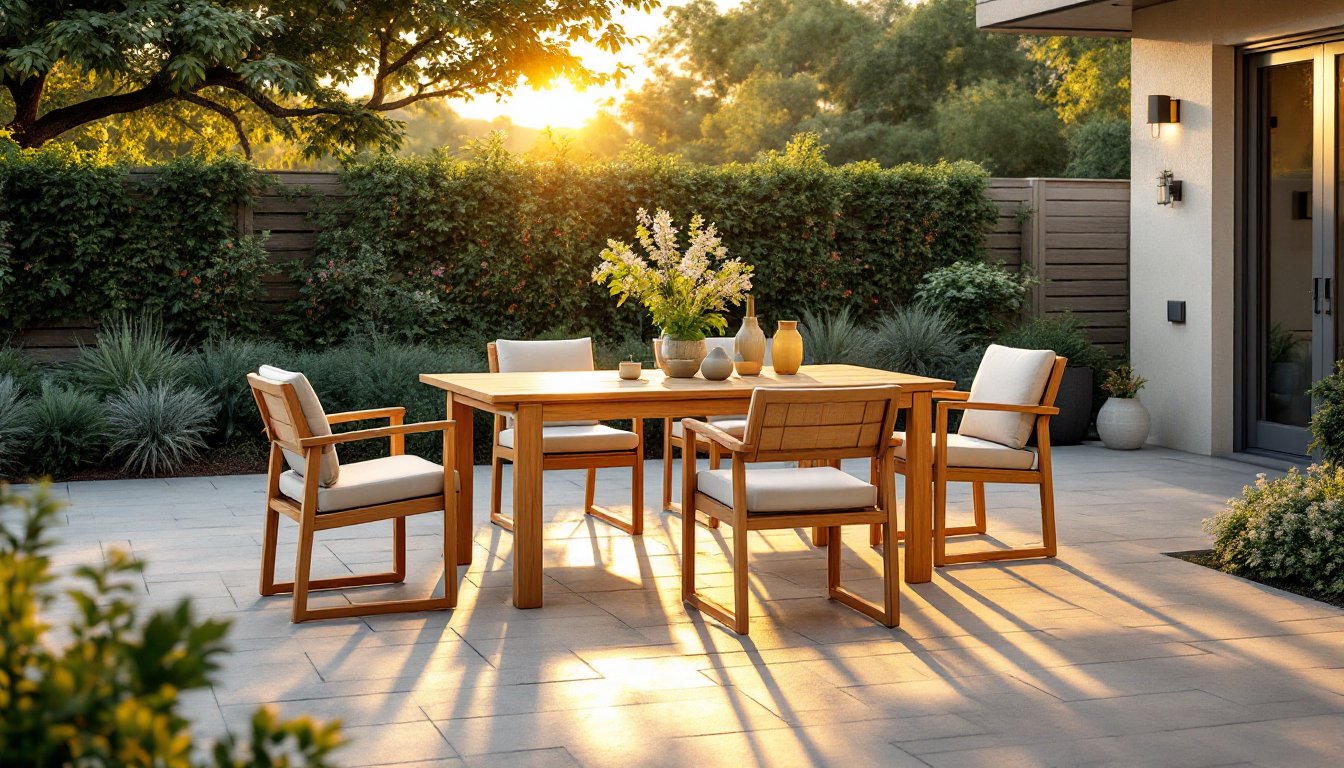
The market offers distinct styles, each with trade-offs. Teak dining sets deliver timeless appeal and natural durability, they’re the long-term investment choice. Teak doesn’t require staining but does need occasional sealing (every one to two years) to maintain color and prevent mildew. Expect to pay $1,200 to $3,000+ for a quality 6-person set.
Aluminum and metal sets dominate the mid-range ($400 to $1,200). They’re lightweight, non-rusting (if powder-coated), and easy to move. Many have slatted surfaces that shed water without pooling. The downside: they can feel industrial, and cheaper versions wobble or rattle after a season or two.
Wicker and rattan sets ($600 to $2,000) offer softer aesthetics and comfortable cushioned seating. They must be 100% outdoor-grade synthetic fiber, not indoor wicker. Real wicker rots outdoors. These sets feel inviting but demand regular cleaning to prevent mildew, especially in humid climates.
Concrete and stone tables ($800 to $2,500) are permanent, stylish, and maintenance-light. The catch: they’re heavy, can’t be moved easily, and may crack in freeze-thaw cycles (relevant if you’re in a cold climate). They’re better for built-in patios than seasonal setups.
Composite and plastic-top sets ($300 to $800) are budget-friendly and low-maintenance. They won’t rot or rust, but cheaper versions discolor over time and can look plasticky up close. Mid-range composites hold up better than the bottom-tier options.
Budget-Friendly vs. Premium Options
Budget doesn’t always mean poor quality, but it does mean trade-offs. A $300 to $500 aluminum set can last five to eight years with minimal maintenance if you’re not rough on it. Seating is basic, often with thin cushions, and the table base might rock slightly. It’s fine for renters or as a starter set.
The $700 to $1,200 range is where most durable, attractive sets live. Materials are better quality, joints are reinforced, and finishes look more refined. Cushions are thicker, bases are more stable, and you’re likely to get longer warranty coverage (three to five years vs. one year on budget lines).
Premium sets ($1,500 and up) typically mean solid hardwood (like teak or ipe), or top-tier metal with commercial-grade fasteners. Cushions are outdoor-grade fabric, seating is ergonomic, and everything is built to last 10+ years with reasonable care. You’re also paying for design, premium sets often come from respected manufacturers with recognized aesthetics.
Before buying budget-priced, ask yourself: Will you replace this in two or three years, or are you annoyed by throw-away furniture? If you use your patio heavily, invest mid-to-premium. If it’s occasional weekend use, budget makes sense. Don’t get suckered by sales on clearance items, damaged packaging or discontinued colors hint at why they’re discounted.
Maintenance and Care Tips
Even the best patio furniture table set needs basic care to stay functional and attractive. Start by understanding your material. Metal benefits from an annual wash with mild soap and water: dry it immediately to prevent water spots. Check for rust spots (especially bolts) and touch up with metal paint if needed. Wood requires sealing or oiling every 12 to 24 months, depending on climate. Use a deck sealant rated for outdoor furniture, it’s not the same as deck stain. Apply in cool, dry conditions and follow curing times before use.
Cushions and fabrics are the first thing to fail. Bring cushions indoors during off-season or store them in waterproof containers. Wash cushion covers monthly during heavy use to prevent mildew, a spray bottle of diluted white vinegar works, or use a hose and mild soap. Let them air-dry completely before returning them. Wicker needs monthly cleaning and regular inspection for loose weaves: tighten or patch gaps promptly.
Stone and concrete tops attract algae in damp climates. A gentle pressure wash (low PSI to avoid damage) or a stiff-bristled brush with diluted bleach solution keeps them clean. Avoid acidic cleaners on natural stone: they etch the surface.
In winter or off-season, store the set in a shed or garage if possible, or cover it with a quality outdoor furniture cover (not cheap plastic, which traps moisture). Allow air circulation under covers to prevent mildew. If you’re in a harsh climate, salt air, heavy freeze-thaw cycles, intense sun, even premium sets benefit from seasonal storage or protection.
Conclusion
The best patio furniture table set matches your space, climate, budget, and actual use patterns. Don’t chase the cheapest option or assume expensive always means better, instead, prioritize material quality appropriate to your environment, realistic sizing for your patio, and honest maintenance expectations. A thoughtfully chosen set becomes a reliable backdrop for years of meals, conversation, and relaxation outdoors. Measure, research, and commit to basic care, and you’ll get solid value from your investment.